How to Motivate Teachers to Experiment With New Technologies

Technologies have been well established within the teaching process for decades now. With new progression comes the challenge of its implementation.
As such, motivating teachers to experiment with new technologies is not about pushing the latest tools or chasing trends. It is vastly about building their confidence to try out the latest innovations that the world has to offer. As technology advances, they must feel that their sense of purpose has not changed.
Many teachers genuinely want to innovate but feel held back by time constraints. Where will you find the time to use the newest resources in a lesson plan that has already been curated? Fear of failure and uncertainty looms as teachers try to uphold classroom values.
So, let us look at the ways school leaders and administrators can encourage teachers to conduct thoughtful experiments and grow comfortably into new digital practices.
Start by Addressing Fear, Not Skill Gaps

One of the biggest challenges to the adoption of technology is not the lack of skill; it is fear. Fear comes in the shape of failure, unprecedented judgement or losing control of your classroom. Teachers often worry that the students will know more than they do and their work will be scrutinized unfairly.
Motivation begins when the administration acknowledges these fears as a real issue and helps teachers to overcome it. Start with framing technology as an experiment with no consequences attached. Set no expectations of the outcomes, instead encourage teachers to generate their own findings and flaws. Make it clear that trying something new does not require perfection or instant results.
When the conversation around technology arises, the risk of transparency and ethical use also surfaces. A teacher grades papers not only by checking the student’s content or use of language, but also looks for honest use of information.
As a school leader, you can train your teachers to use an AI writing detector to catch any unethical practices in student work. These tools can be used as a way to support academic integrity. Addressing the teachers' emotional barriers first will create psychological safety, which is essential for genuine experimentation.
Link Technology to Actual Classroom Issues

Teachers are always looking for strategies to tackle classroom problems. As the generation of students changes, new challenges surface for the educators. They must constantly look for innovative ways to deliver lessons as well as maintain class rules.
From black boards and chalks to Powerpoint presentations, the world has come a long way. Nowadays, teachers can even learn the steps to make an animation online. With the short attention span of children these days, instruments such as animation can come in handy. The struggling learners may even find the classes more interesting.
AI at present, can perform a lot of tasks which may save your teacher’s time. Instant grading tools for formative assessments allow teachers to provide faster and improved feedback. There are several devices which also support differentiated instructions for lower to higher order learners.
If teachers see technology as a tool that lightens their workload rather than adds to it, they are more open to accepting it. You can grow their motivation when they feel that technology respects their time and professional judgment. Show them the purpose instead of making it performative and your teachers will be more willing to innovate with technology.
Provide Them Time, Not Just Training

Teachers have an aversion towards implementing new technology into their process mainly because of one factor; time. Teachers are already overwhelmed with making lesson plans, grading papers, meetings, dealing with parents and often just substituting for understaffed positions. They cannot meaningfully experiment with new technologies if they are already overburdened.
Schools can motivate them by intentionally building time into schedules for exploration and understanding of the latest technologies. They need a moment to reflect on their learning before moving on to practice.
You as the administration can ensure dedicated planning periods to train your teachers to incorporate technology into their classrooms. Reduced administrative tasks can also lessen their burden and allow them time. The school can arrange collaborative tech days where dedicated hours are given to hands-on learning tools rather than lectures.
When teachers are given space to try, fail, adjust, and try again, learning becomes sustainable. You as a leader can also successfully motivate them to incorporate technology. Without time, even the most enthusiastic teachers will struggle to adopt new tools effectively.
Use Peer Influence and Teacher Ambassadors

Teachers trust other teachers. They can influence and motivate each other to take on challenges, having gone through the same experiences together. Even if the older generation is apprehensive towards the administration, peer influence can be one of the most powerful motivators for technology adoption.
You should first identify a champion teacher, one who is eager to experiment, learn and then share with their colleagues. This can shift your school culture slowly but organically.
So, how can you identify such teachers? These individuals do not need to be tech experts; they simply need to be willing to learn out loud. Once you recognize the potential candidate, encourage them to take on new ways to incorporate technology into the teaching process. They can then share both successes and failures in staff meetings or small group discussions.
Seeing a coworker overcome obstacles in a transparent way gives the impression that they can also take on the challenge. Because peer-led demos reflect actual classrooms, include students and face constraints, they feel more relevant than presentations from external trainers.
When innovation spreads horizontally rather than top-down, it fosters community growth.
Make Experimentation Low-Risk and Voluntary

Teachers are often free spirited and like to attempt things in their own ways. So, mandatory experimentation might not make a fruitful change in their pattern of work. However, if the integration process can be made low-risk, teachers will be interested to take on the gamble.
Small-scale trials allow educators to explore without pressure. Schools can offer opt-in initiatives where the interested teachers can volunteer to participate. A preliminary test can be done with certain advanced technologies before initiating full integration.
As school leaders, avoid formal evaluations in classes where teachers are trying out new technological features. Allow them the freedom to attempt it as a demo which takes the pressure off of the process.
When teachers know that trying something new will not negatively impact their professional standing, they are more likely to take creative risks. Low-risk environments will foster curiosity and intrinsically encourage your team. Voluntary participation will make it easier for you to motivate them.
Align Technology with Pedagogical Values
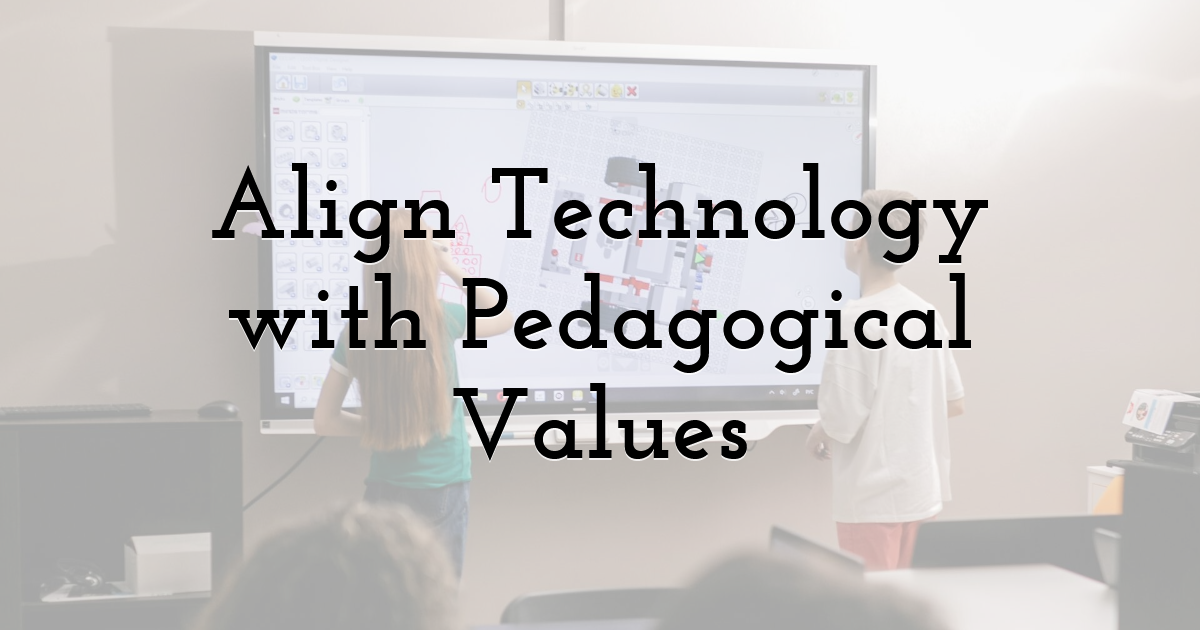
Teachers are deeply connected to their teaching values. Challenging those values may seem disrespectful if not handled carefully. Motivating them becomes much easier once you are able to figure out their pedagogical approach.
If an educator prioritizes student centered learning, the school should provide them with technological tools that facilitate the process instead of complicating it. This can also include helping students find technology that supports their particular learning needs. Teachers can introduce appropriate AI tools for students to support activities such as research, note-taking, writing, and revision, while keeping the focus on technology as a learning aid rather than a replacement for learning. On the other hand, if a teacher wants to foster critical thinking in the classroom, the school should be ready with user-friendly technology to be incorporated in the classroom.
The administration should not uphold digital tools as a replacement for traditional methods. Instead, show your team how they are an extension of existing practices.
Hold regular discussions and take their feedback on the changes you want to make, as it will make them feel like a part of the process and motivate them.
Offer Ongoing Training and Responsive Help

If a teacher feels stranded after the initial training, they will lose motivation soon. You cannot hand over a new technology to your team and expect everyone to be equally on board with the plan, especially amidst their excessive workload.
Ongoing training programs and an active support team is essential. This means having a proper training and development team which includes access to instructional coaches and tech coordinators. There should also be peer mentors who can offer timely assistance.
The school should guarantee a support team who are approachable and non-judgemental, allowing even the silliest questions from the teachers. Weekly drop-in help sessions can be made mandatory to help transition veteran educators towards modern technology.
Consistent support and communication will help you to motivate your teachers effectively.
Acknowledge and Celebrate Progress, Not Just Outcomes

Teachers are still just students at heart. Through teaching, they are the ones who are forever learning. Over the years, educators have used recognition techniques to award growth within their students. Recognition plays a key role in their motivation as well.
However, focus the reward on growth and adaptability, not just the results. If reflection on feedback is constantly rewarded, your teachers will be motivated to keep up with their progress. A small token of appreciation for the ones who try the new tools will further encourage everyone else to participate.
This can be done through newsletters but more effectively during staff meetings. Public recognition reinforces positive norms and signals to your team that not only outcomes, but experimentation is valued.
Motivation thrives in environments where progress is celebrated collectively. When educators feel seen and appreciated for stepping outside their comfort zones, they are more likely to continue exploring and improving their practice.
Final Thoughts:
Technological integration within the education system can be beneficial for educators. Many teachers want to innovate, but packed schedules, fear of failure, and uncertainty about classroom control often stop them before they even start.
This is where leaders step in—by creating space for thoughtful experimentation and helping teachers ease into digital practices. By framing technology as low-stakes experimentation, it makes the teachers feel safer trying something new.
Teachers are far more open to technology when it clearly solves real problems and supports their values instead of challenging it. Seeing a colleague experiment openly, successes and failures included, makes innovation feel achievable and relevant.
One-off training is not enough. Consistent, approachable support keeps teachers from feeling stranded and builds long-term confidence. When effort and growth are recognized, teachers feel encouraged to keep experimenting and improving together.
In the end motivation is all about helping teachers feel confident, valued, and secure in their purpose as educators.
Until next time, Be creative! - Pix'sTory