5 Cloud Security Solutions for Modern Businesses
Moving workloads to the cloud can simplify infrastructure, but it rarely simplifies security. A company may run customer applications in one public cloud, store business data in another, and depend on several SaaS platforms, while its security team still works across disconnected tools and policies.
That fragmentation creates room for:
- • Exposed storage
- • Excessive permissions
- • Vulnerable workloads
- • Missed alerts
Cloud security solutions can address these gaps, but products vary widely in architecture, deployment, and coverage.
The vendors mentioned here are some of the most well-known in this space and support different requirements, from cloud-native application protection to secure access and managed threat response.
Five Cloud Security Solutions to Consider
There isn’t one product that fits every cloud program, which is why buyers should first establish whether their biggest concern is workload protection, identity exposure, application security, remote access, or operational visibility.
1. Fortinet
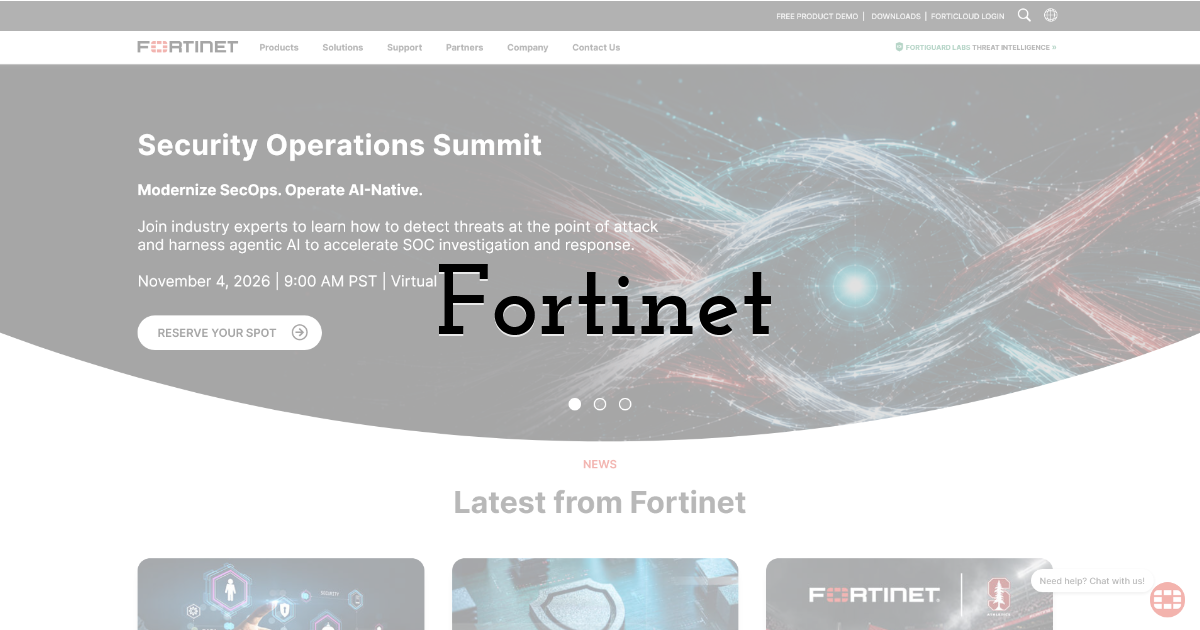
Fortinet takes a platform-led approach to cloud security. It connects network, application, workload, and access controls through its Security Fabric. That makes it a strong first option for businesses running hybrid infrastructure or trying to reduce policy differences between data centers and cloud environments.
Its primary cloud security solutions include:
- • FortiCNAPP for application and workload risk
- • FortiGate VM and FortiGate CNF for cloud network security
- • FortiAppSec Cloud for web applications and APIs
- • FortiSASE for cloud-delivered access
FortiCNAPP brings together posture management, workload protection, infrastructure-as-code scanning, entitlement analysis, and vulnerability management.
This product mix gives security teams several deployment paths. A business can begin with virtual firewalls for cloud network inspection, for example, then introduce CNAPP capabilities as its use of containers, Kubernetes and infrastructure as code grows.
Fortinet is ideal for organizations seeking cloud security solutions for businesses without abandoning established network controls. Buyers should still test how policies, logs and investigation workflows move between individual products.
Best suited to: Enterprises with hybrid or multi-cloud environments that want network security, CNAPP, application protection and secure access from one vendor.
2. Barracuda
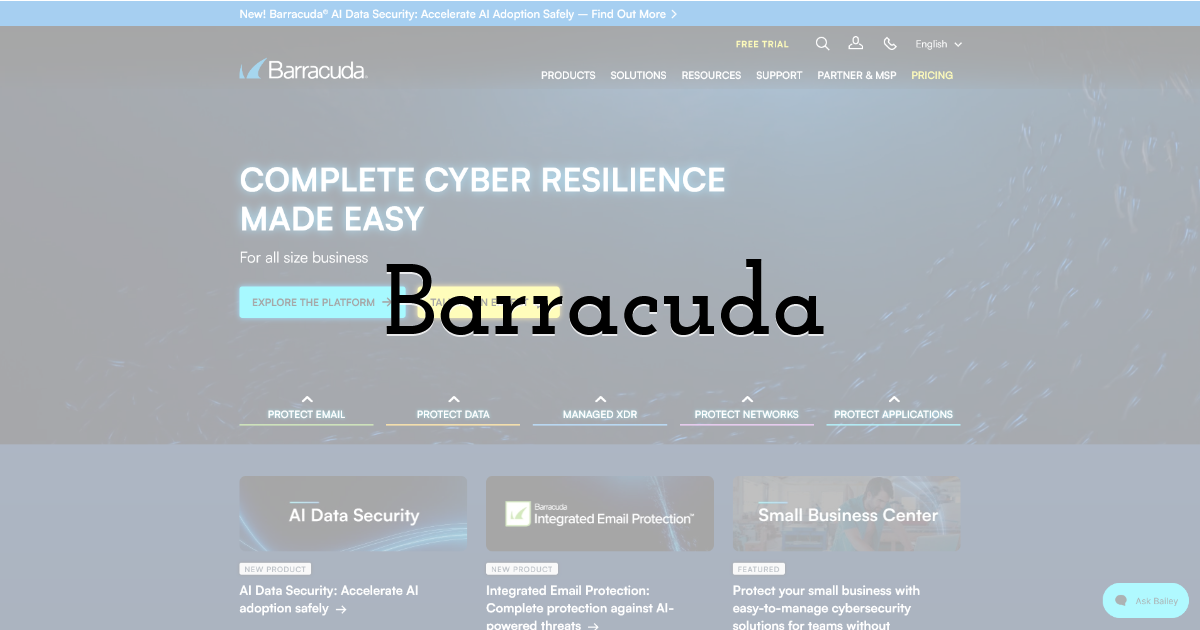
Barracuda is a practical cloud security solutions option for businesses concerned about cloud-hosted applications, email, SaaS data, and distributed networks. Its portfolio includes CloudGen Firewall, application and API protection, email security, Microsoft 365 backup and managed XDR services.
Additionally, BarracudaONE provides a central management layer across email, data, application and network security. Its dashboard brings deployment visibility, findings and response information into one place, while Barracuda Managed XDR adds continuous monitoring for organizations that don’t operate a large internal SOC.
The vendor’s application security capabilities are another point of interest. Businesses running public-facing websites and APIs can use its tools to address application attacks, automated bots, DDoS events and vulnerabilities without building every control directly into the application stack.
Barracuda’s cloud firewall glossary provides additional context on how these software-based controls inspect traffic across cloud environments.
The trade-off, however, is breadth versus depth. Architecture teams should establish whether they need broad protection across email, applications and networks or more specialized cloud-native development controls.
Best suited to: Mid-sized organizations seeking cloud application, email, data protection and managed security capabilities with relatively straightforward administration.
3. Sophos

Sophos approaches cloud security through connections between workloads, networks, endpoints and managed response. Its cloud portfolio supports major public cloud platforms and includes workload protection, Sophos Firewall, XDR, MDR and identity-focused detection.
Moreover, Sophos XDR gathers telemetry across cloud services, workloads, networks and identities. Its workload coverage extends to Windows and Linux servers, containers and Kubernetes environments, while Sophos Firewall can be deployed virtually within public cloud infrastructure.
That connection can be useful when investigations cross technical boundaries. For instance, a compromised administrator’s laptop may be the starting point, yet the meaningful activity could appear later inside a cloud workload or identity service. Seeing those events within the same investigation can save analysts from rebuilding the sequence manually.
Best suited to: Organizations that want cloud workload security tied closely to endpoint defense, XDR, and an optional managed response service.
4. Zscaler
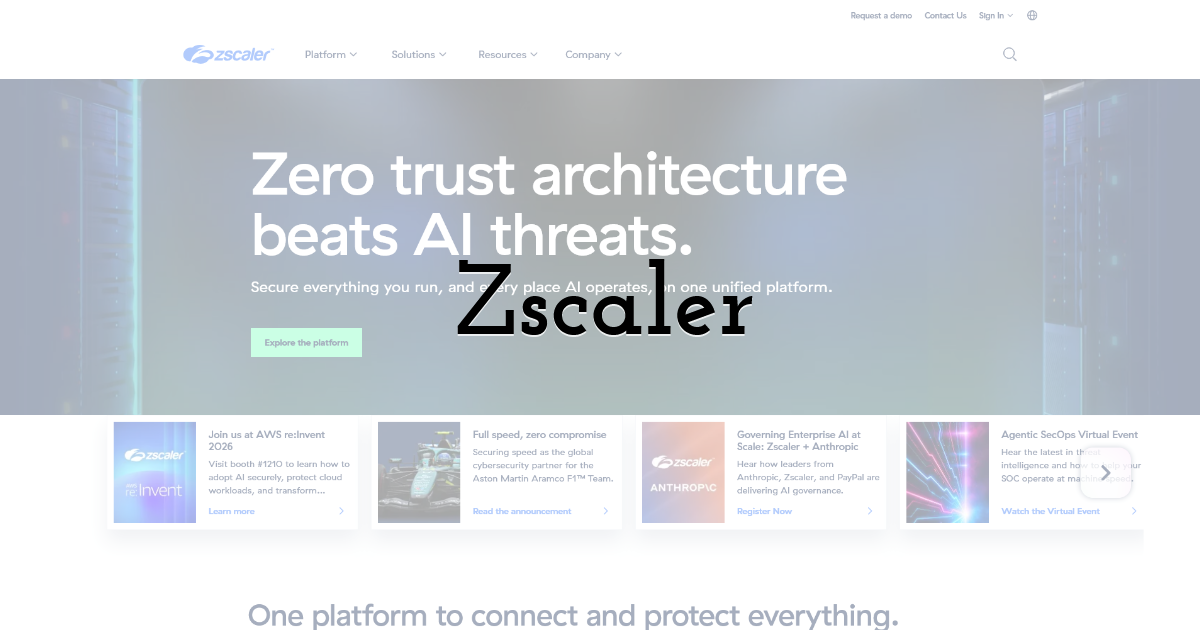
Zscaler is primarily associated with cloud-delivered secure access. Its Zero Trust Exchange supports users, devices, branches and workloads without treating connection to the corporate network as the default access model.
The product portfolio here includes:
- • Zscaler Internet Access for internet and SaaS traffic
- • Zscaler Private Access for private applications
- • Zero Trust Cloud for workload communications
- • Zscaler Digital Experience for performance monitoring
- • Cloud sandboxing, data loss prevention, and firewall capabilities are also available
This approach perfectly fits companies replacing appliance-based web gateways or remote-access VPNs. So, instead of giving a user broad network reach, cloud security gateway policies can grant access to a specific application after evaluating identity, device condition, and other contextual signals.
Best suited to: Distributed enterprises prioritizing zero-trust access, SaaS protection and cloud-delivered security for users and workloads.
5. Google Cloud Security Command Center
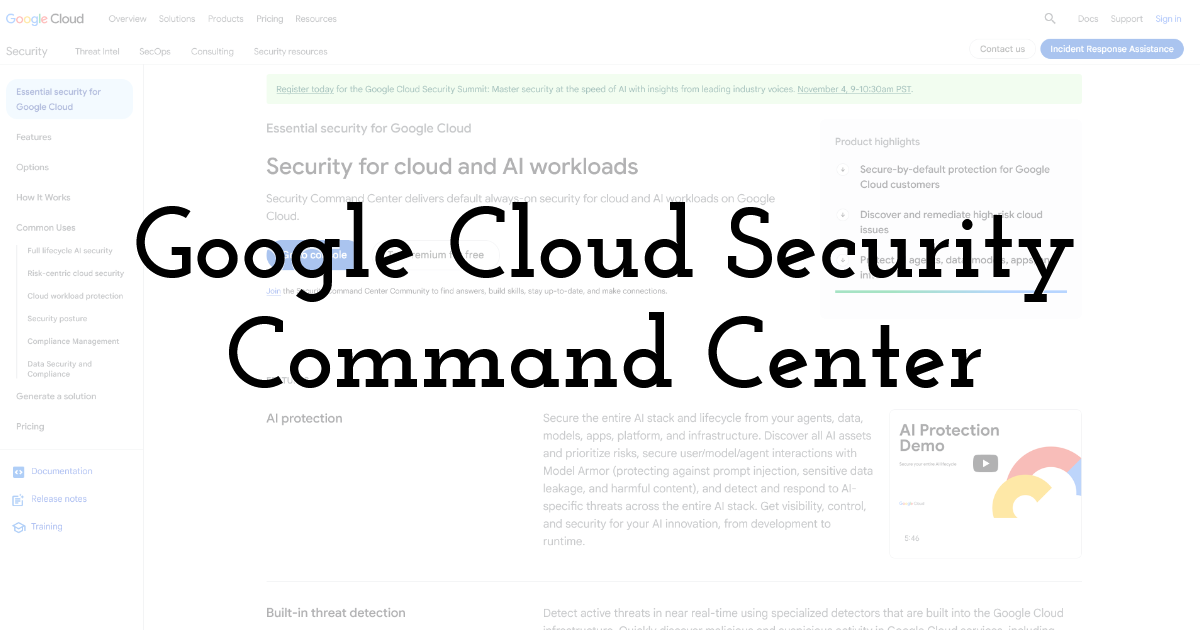
Google Cloud Security Command Center is the cloud-native option on this list. It provides centralized risk and threat visibility for assets hosted in Google Cloud, including virtual machines, containers, data services and AI workloads.
The platform can also identify configuration weaknesses, vulnerable resources, excessive permissions and active threats. It also supports compliance monitoring, data security posture management and attack-path analysis.
Now, native context is its main advantage. Security Command Center understands Google Cloud resources and services without requiring teams to translate every asset into a third-party model.
The limitation is equally clear. Organizations running several cloud providers may still need another management layer for consistent cross-cloud visibility and policy enforcement.
Best suited to: Businesses heavily invested in Google Cloud that want native posture management, threat detection and asset-level findings.
How to Compare Cloud Security Vendors
Test a shortlist of cloud security solution providers against the organization’s operating conditions, not a polished demonstration environment. Buyers should:
- • Map each product against public cloud, SaaS, container and on-premises coverage.
- • Test whether it connects identity, network, workload and data findings.
- • Review SIEM, ticketing, identity, and DevOps integrations.
- • Measure false positives and investigation time.
- • Check data location, retention, administrative access and audit evidence.
- • Model licensing changes as cloud accounts, workloads and users increase.
- • Confirm what the vendor manages and what remains the customer’s responsibility.
The last point is routinely missed. The US Federal Trade Commission’s business security guidance advises organizations to restrict access, protect retained information, secure remote connections, and monitor network activity. Those principles remain relevant even when a cloud provider operates the infrastructure.
Choosing Cloud Security Solutions Around Real Risk
The right selection won’t come from buying the platform with the longest feature list. It comes from identifying where exposure is accumulating and whether the security team can operate the proposed controls without creating another queue of neglected alerts.
Fortinet offers a broad starting point for businesses seeking connected protection across cloud applications, workloads, networks and users. Barracuda may suit teams prioritizing applications, email and managed services, while Sophos connects cloud signals with endpoint and response operations. Zscaler is geared towards secure access, and Google Cloud Security Command Center provides native visibility for Google Cloud estates.
Cloud security solutions should help teams answer practical questions quickly: What’s exposed? Which identity can reach it? Is the activity suspicious? Who owns the fix? If a product can’t make those answers clearer during a realistic trial, adding it may simply move the blind spot to another dashboard.
Until next time, Be creative! - Pix'sTory
Recommended posts
-
5 Cloud Security Solutions for Modern Businesses
Read More › -

Smart Visual Filters: Enhancing Online Safety with Automated Image Screen...
Read More › -
How SASE Services Improve Security for Remote and Hybrid Teams
Read More › -
The State of Cloud Security: Risks, Trends, and Solutions
Read More › -

How to Keep Your Google Docs Content Safe From Plagiarism Using This Powe...
Read More › -

How Secure Payments Enhance User Experience on Your Website
Read More ›