Mysterium VPN: The Coffee Chat You Didn't Know You Needed About Your Internet Privacy
So I was sitting in my kitchen last week, coffee going lukewarm because I got distracted (again), scrolling through yet another article about some company getting hacked and leaking half a million passwords. And I just sat there thinking, okay, when did we all just... accept this? When did "your data isn't really yours" become the default setting of modern life?
Honestly, I've been down the VPN rabbit hole for a few years now. Tried a bunch of them. Some were fine. Some were sluggish, some tried to upsell me a "family plan" I didn't ask for, and a couple of them made me wonder who was actually running the servers I was connecting through. That last part bugged me more than it probably should have. If I'm paying someone to protect my privacy, shouldn't I at least have a vague idea of who's on the other end?
That's basically how I stumbled onto Mysterium VPN, and I've got to say, it's a different animal from what I'm used to. Not because it's flashy or has some slick ad campaign (it doesn't, really), but because the whole idea behind it is kind of refreshing. Grab your coffee, or tea, or whatever gets you through the afternoon slump, and let's talk about it.
What even is Mysterium VPN, anyway
Here's the thing about most VPNs — and I mean almost all of them — they run on centralized servers. One company owns the infrastructure, controls the exit points, and technically could see (or be forced to hand over) your traffic if the right government agency came knocking. It's a little unsettling once you actually think about it.
Mysterium works differently. It's built on a decentralized network, which just means the exit nodes — the point where your internet traffic pops back out onto the web -aren't run by one central company. They're operated by regular people all over the world, sort of like how a torrent works but for your entire internet connection instead of a single file. Nobody's holding all the keys. There's no single office building somewhere that a subpoena can march into and demand logs from, because there simply aren't centralized logs to hand over in the first place.
Is that a little wild to wrap your head around? Yeah, kind of. But it's also the whole point. Mysterium is for people who are tired of paying for bloated VPN apps stuffed with features nobody asked for, built by the same handful of corporations that helped centralize the internet into the mess it is today. The pitch here is simple: a free, open, decentralized web without borders, without someone watching over your shoulder, and without fifteen unnecessary menus to click through just to turn the thing on.
If you want the deeper technical breakdown of how all this decentralization stuff actually works under the hood, Mysterium VPN specialists have written a much more detailed piece over on MysteriumVPN.com that goes into it further — worth a read if you're the type who likes to know exactly how the sausage gets made.
Okay but does it actually work well
Fair question. Idealism is nice, but if the thing lags every time I try to stream something or drops connection mid-video-call, I don't care how noble the mission is. So here's what you actually get with it.
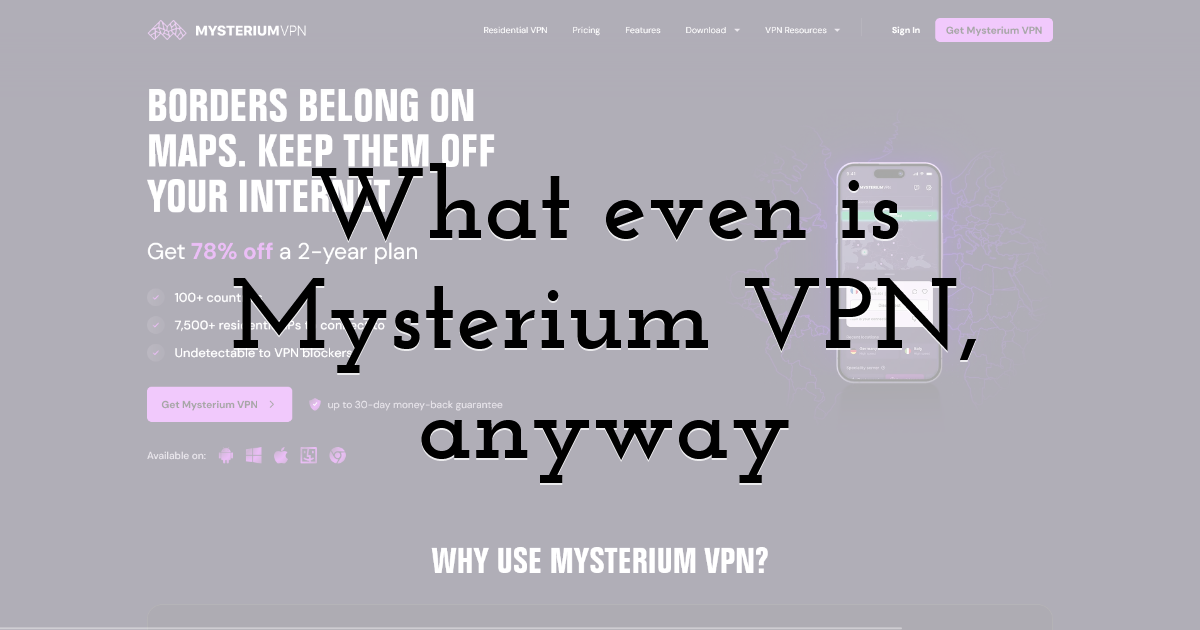
Mysterium covers 100+ countries, which is honestly more than most of the big-name VPNs I've tried. And it's not just server locations in the traditional sense — they've got over 7,500 residential IPs in their pool. That's a big deal if you've ever dealt with websites flagging you as "suspicious" for using a VPN. Residential IPs look like regular home internet connections because, well, they are. It's the difference between walking into a store looking like a normal customer versus walking in wearing a trench coat and sunglasses. One of those gets you flagged immediately.
The nerdy features, explained simply

Okay, I promised not to drown you in jargon, so let me translate a few of the more technical bits into normal-person language.
DNS leak protection and IP leak protection basically make sure your real location and browsing activity don't accidentally slip out around the VPN, even for a split second. Think of it as double-checking that the curtains are actually closed, not just mostly closed.
It runs on the WireGuard protocol with ChaCha20 encryption, which is just a fancy way of saying it uses a modern, efficient method of scrambling your data so nobody can read it in transit. It's faster and lighter than a lot of older encryption methods, which is part of why the connection feels stable rather than sluggish.
There's a kill switch, meaning if your VPN connection drops for any reason, your internet just... stops, instead of quietly reverting to your unprotected connection without telling you. I like that. It's the digital equivalent of a friend physically grabbing your arm before you walk into traffic.
They also don't keep logs, comply with GDPR (that's the European data protection law, for anyone who hasn't had the pleasure of reading through it), let you pick your server location manually, and the upload and download speeds have genuinely surprised me. I half expected the decentralized setup to slow things down. It didn't, at least not in any way I noticed during regular browsing or streaming.
So, worth trying or nah?

Look, I'm not going to pretend one VPN is going to fix the entire mess that is online privacy in 2026. That's a bigger conversation, honestly, one that probably needs another few pots of coffee. But if you're tired of feeling like your data is just floating around being harvested by whoever's willing to pay for it, and you like the idea of a VPN that isn't controlled by one giant company sitting on a mountain of your traffic logs, Mysterium is worth poking around with.
Have you ever actually sat down and thought about who can see what you do online? Not in a paranoid, tinfoil-hat way, just genuinely thought about it? It's a weirder question than it sounds.
If you've tried Mysterium, or you're VPN-curious and thinking about giving it a shot, I'd love to hear about it. Drop your experience in the comments, tell me what you think about the whole decentralized approach, or just tell me I'm wrong about something. That's how these conversations are supposed to go anyway, right? Over coffee, back and forth, figuring it out together.
Until next time, Be creative! - Pix'sTory
Recommended posts
-

What Your Favorite Design Tools Can Teach You About Choosing the Right So...
Read More › -

Inside the World of Limited-Access Drops: How Sites Handle High Demand
Read More › -

Why Memes Have Become One of the Internet’s Most Powerful Communication T...
Read More › -

The Hidden Infrastructure That Keeps the Internet Running Smoothly
Read More › -

7 Things Someone Can Do With Your IP Address
Read More › -
Mysterium VPN: The Coffee Chat You Didn't Know You Needed About Your Inte...
Read More ›