The Invisible Search Layer Most Brands Are Missing (And How Smart Marketers Are Winning It)
Google is no longer the only gatekeeper of visibility.
People are asking ChatGPT for product recommendations. They are using AI Overviews instead of scrolling. They are turning to generative engines for research, comparisons, and summaries.
And here’s the kicker: most brands are completely invisible in these answers.
This is where modern AI SEO services step in. Not just to rank on page one. Not just to optimize title tags. But to position your brand inside AI-generated responses.
Optimising for AI search is not traditional SEO with a new label. It requires structural precision, entity authority, and content architecture built for machine interpretation. In this guide, we break down exactly how an AI-driven agency optimises for ChatGPT, generative engines, and AI-first search ecosystems in 2026.
Why AI Search Changes the SEO Game
Traditional SEO focused on blue links.
AI search focuses on answers.
When someone asks ChatGPT a question, it does not return ten ranked pages. It synthesises information from multiple sources and generates a consolidated response. That means your content must be clear, authoritative, and structured enough to be referenced or cited.
AI SEO services are designed to bridge this gap. They optimize not just for ranking, but for extraction, summarisation, and citation.
If search is evolving from links to language, your optimisation strategy must evolve too.
Step 1: Building Entity Authority, Not Just Keyword Rankings
AI systems operate heavily on entities rather than isolated keywords.
An entity is a recognised concept or brand connected to structured knowledge. When ChatGPT or similar systems reference information, they rely on semantic relationships between entities.
An AI-focused strategy strengthens brand signals across structured data, knowledge panels, authoritative mentions, and consistent topical coverage.
AI SEO services prioritise entity mapping. Instead of creating random blog posts around keywords, they build interconnected content clusters that reinforce expertise within a defined subject domain.
Authority is not declared. It is architected.
Step 2: Structuring Content for Machine Readability

AI engines favour clarity.
Dense, vague, or unstructured content is difficult for language models to summarise accurately. Structured content with clear headings, logical flow, and concise explanations increases extractability.
Professional AI SEO services ensure that content follows semantic hierarchy. Headings align with search intent. Paragraphs answer specific sub-questions directly. Lists and explanations are structured in digestible formats.
When AI systems scan pages, they need clean signals. Structure is that signal.
Step 3: Implementing Advanced Structured Data

Schema markup is no longer optional in advanced optimization.
Structured data helps search engines and AI systems understand context. FAQ schema, HowTo schema, Organization schema, and Article schema enhance clarity around content purpose and authority.
AI SEO services implement comprehensive structured data frameworks across websites. This increases eligibility for AI-driven summaries and enhanced search features.
When machines understand your content precisely, they are more likely to surface it.
Step 4: Optimising for Conversational Queries
AI search is conversational.
Users no longer type fragmented keywords. They ask full questions. They seek explanations. They request comparisons and recommendations.
AI SEO services analyse conversational query patterns and design content that mirrors natural language intent.
Instead of targeting “best SEO agency,” content might address “How do I choose the right SEO agency for a SaaS company?”
Alignment with conversational phrasing increases the likelihood of being referenced in generative responses.
Search is becoming dialogue-driven. Your content must speak the same language.
Step 5: Strengthening Topical Depth and Content Clusters
AI engines favour depth over superficial coverage.
A single blog post is unlikely to establish authority. A structured content ecosystem reinforces credibility.
AI SEO services develop pillar pages supported by comprehensive cluster content. Each cluster addresses a specific subtopic while linking back to a central authority hub.
This interconnected model strengthens semantic relationships and signals expertise to AI systems.
Surface-level optimization cannot compete with structured topical dominance.
Step 6: Monitoring AI Visibility and Referral Traffic
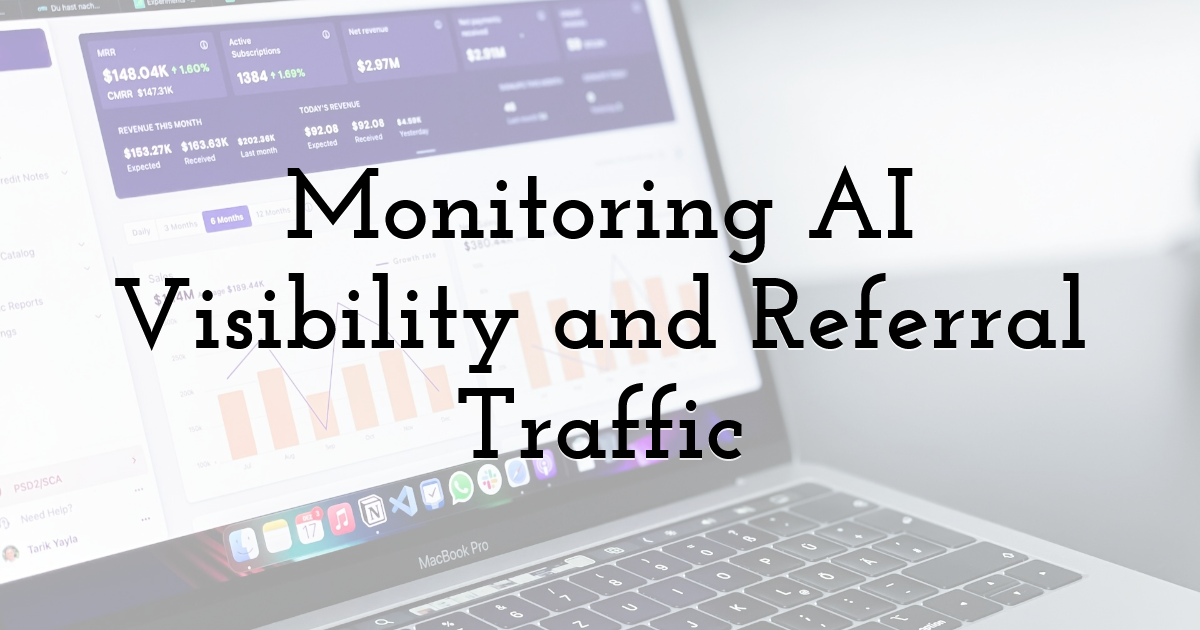
One of the biggest misconceptions is that AI search cannot be tracked.
While direct attribution is complex, AI-driven referral patterns often appear in direct traffic segments or through specific user agent signals.
Advanced AI SEO services monitor referral sources, analyse traffic anomalies, and evaluate AI citation mentions across generative platforms.
Optimisation without measurement is guesswork. Strategic tracking transforms visibility into insight.
Step 7: Technical Infrastructure Optimisation

AI systems still rely on crawlable, accessible content.
Broken links, poor site speed, and messy architecture reduce machine trust.
AI SEO services strengthen technical foundations through clean URL structures, canonical control, XML sitemap segmentation, and crawl budget optimization.
When AI engines reference content, they favour reliable sources. Technical stability reinforces reliability.
Step 8: Earning Authoritative Mentions

Generative AI models synthesise information from reputable sources.
If your brand lacks authoritative citations across industry publications, directories, and trusted platforms, AI systems are less likely to reference you.
AI SEO services incorporate digital PR and authority-building campaigns into strategy.
Mentions across credible sources strengthen brand legitimacy in machine learning ecosystems.
Trust compounds across networks.
Step 9: Content Precision Over Content Volume

AI has made mass content production easy. That does not mean it is effective.
Generative engines penalise vague, repetitive, or shallow material.
AI SEO services focus on high-precision content that directly answers intent-driven questions. They remove fluff. They tighten explanations. They ensure factual accuracy.
Precision increases citation probability.
Quality always beats quantity in machine-led ecosystems.
Step 10: Adapting to AI Algorithm Shifts
AI search models evolve rapidly.
What works for visibility today may shift as generative algorithms improve contextual reasoning.
A forward-thinking AI SEO services provider continuously tests formatting changes, structured data refinements, and content depth variations.
Adaptability is the new stability.
The Difference Between Traditional SEO and AI-Driven Optimisation
Traditional SEO prioritised ranking position.
AI optimisation prioritises citation probability.
Traditional SEO optimised pages individually. AI-driven strategy optimises semantic ecosystems.
Traditional SEO focused on keyword density and backlinks. AI SEO services emphasise entity authority, structured clarity, and conversational relevance.
The shift is structural, not cosmetic.
Why Most Brands Are Invisible in AI Search
Most websites were built for ranking, not referencing.
They lack structured clarity. They lack topical depth. They lack entity reinforcement.
AI systems prefer trusted, well-structured, and context-rich content.
Without a deliberate AI-focused strategy, your site may rank well yet remain absent from generative answers.
Visibility in AI search requires architectural precision.
Final Thoughts:
Search is transitioning from a list of links to synthesised intelligence.
Optimising for ChatGPT and AI search is not about gaming algorithms. It is about becoming structurally understandable and contextually authoritative.
AI SEO services exist to position brands within this evolving landscape. They align entity authority, structured data, conversational optimisation, and technical precision into a cohesive strategy.
Because in 2026 and beyond, visibility will not belong solely to the highest-ranking page.
It will belong to the most structurally trusted source.
Until next time, Be creative! - Pix'sTory
Recommended posts
-
Making the Correct Choice for SMTP Ports 25, 465, 587, and 2525
Read More › -

The Future of Instagram: What Student Bloggers Have to Say
Read More › -

How and Why You Should Utilize Your Email Marketing Templates Efficiently
Read More › -

StudyAgent Review: The All-in-One Writing Tool for Students
Read More › -

5 Best Practices for Drafting Perfect Newsletter Design
Read More › -

Image Quality Problems That Can Ruin an Otherwise Great Design
Read More ›