AI in Manufacturing: 7 Practical Use Cases Changing Factory Operations
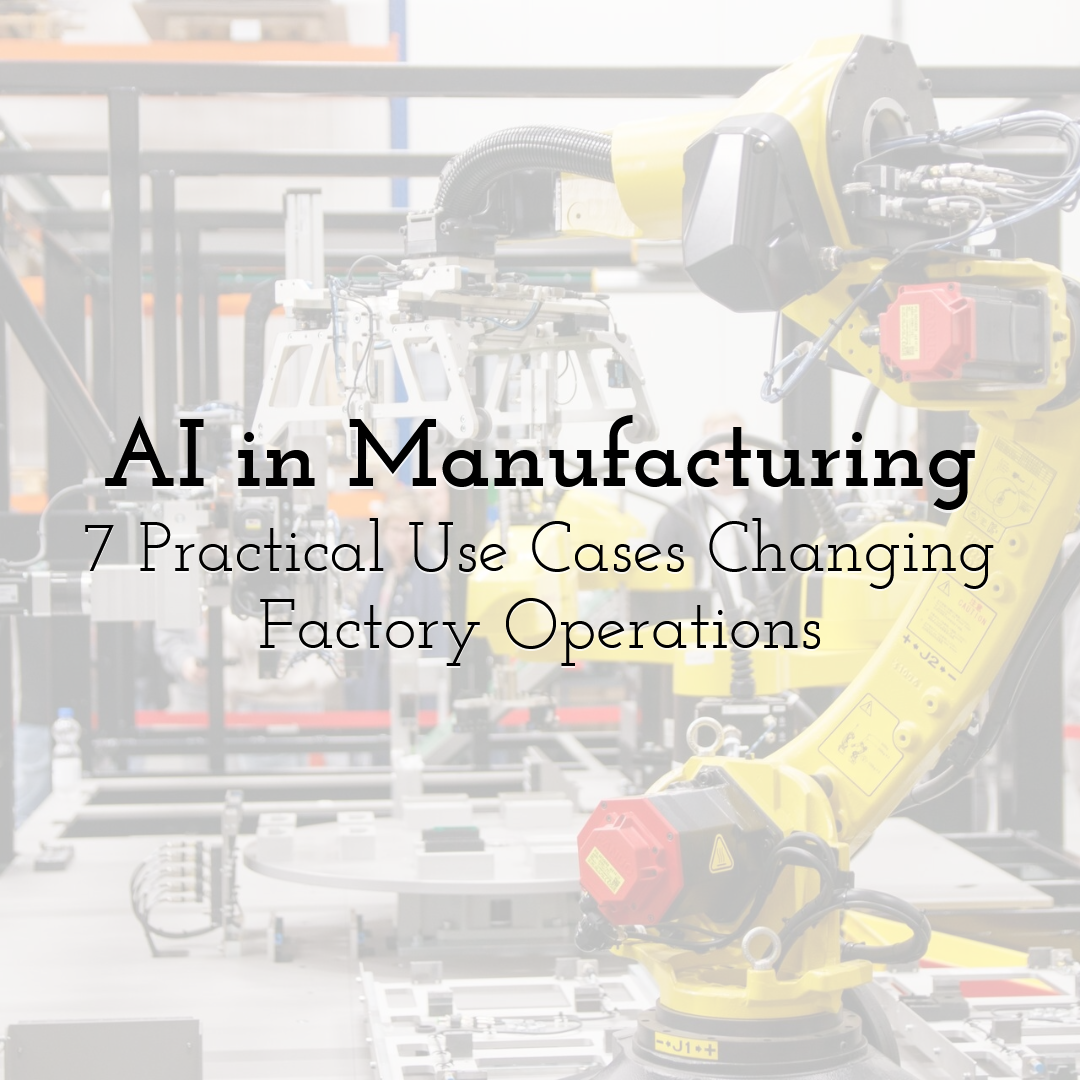
Manufacturing has always depended on timing. A machine stops at the wrong moment, and the whole production line can slow down. A small defect goes unnoticed, and the cost may appear later through returns or wasted materials. A planning mistake can leave a warehouse full of parts nobody needs while a critical component runs out.
AI helps manufacturers deal with these problems earlier. It reads signals from machines, cameras, production systems, warehouse records, and energy usage. Then it turns those signals into warnings or recommendations that people can act on. The goal is not to remove engineers, operators, or managers from the process. The goal is to give them better visibility before a small issue becomes expensive.
Top AI use cases in manufacturing
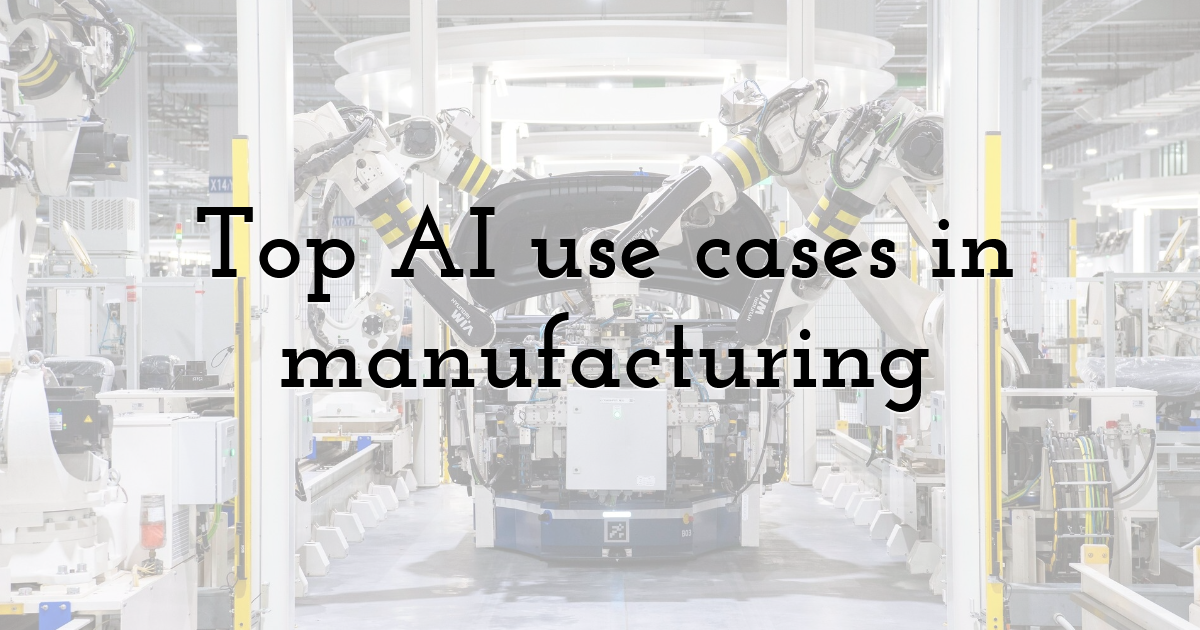
AI becomes useful in manufacturing when it is connected to a process that already creates pressure. It can help teams prevent downtime, improve quality, plan production more accurately, and use resources with less waste. The strongest use cases are not abstract. They solve problems that factory teams already deal with every day.
Predictive maintenance for equipment
Predictive maintenance is one of the clearest AI use cases in manufacturing. Instead of waiting for a machine to fail, the system studies sensor data and looks for early signs that something is changing. A small shift in vibration, heat, pressure, or operating rhythm can suggest that a component needs attention before it breaks.
This gives maintenance teams more control over downtime. Repairs can be planned when they cause less disruption, rather than during an unexpected production stop. The benefit is not only lower repair cost. It is also the ability to keep production schedules steadier and avoid the chain reaction that follows a sudden breakdown.
Generative design for product development
AI can also support product design by helping engineers explore more options in less time. In a traditional process, a team may test a limited number of design ideas because every option requires manual modeling and review. With generative AI development, engineers define the target requirements, and the system creates possible structures that meet those constraints.
This can be useful when a product needs to be lighter, stronger, cheaper to produce, or easier to assemble. The engineer still makes the final decision, but AI helps expand the design space. Instead of starting with one or two ideas, the team can compare many workable directions and choose the one that best fits production realities.
Supply chain planning with earlier warning signals
Supply chains are difficult to manage because small problems can spread quickly. A supplier delay can affect production. A transport issue can change delivery timing. A demand shift can make an old plan unreliable. AI helps by reading operational signals and showing where pressure may be building.
A manufacturing team can use AI to improve planning around materials, delivery routes, and supplier performance. The system does not need to predict the future perfectly to be useful. It simply needs to give teams an earlier warning so they can adjust orders, choose another supplier, or change production timing before the issue reaches customers.
Inventory management that reduces waste
Inventory is a constant balancing act. Too much stock ties up money and takes up space. Too little stock can stop production or delay orders. AI can help manufacturers understand which materials are likely to be needed soon and which items may sit unused.
This is especially useful when demand changes often or when suppliers have different lead times. The system can study sales patterns, production plans, supplier reliability, and seasonal shifts to suggest better stock levels. People still decide how to act, but AI gives them a stronger base than static spreadsheets or last year’s assumptions.
Automated quality inspection
Quality inspection is another area where AI can bring visible value. Computer vision systems can review products on the line and spot defects that may be difficult to catch during manual inspection. This can include surface flaws, assembly errors, missing parts, or shape differences that signal a problem.
The main advantage is consistency. A human inspector can become tired after hours of repetitive work, while a vision system can keep checking with the same level of attention. Human review is still needed for unclear cases, but AI can reduce the number of defects that pass unnoticed and help teams find quality issues earlier in the process.
Demand forecasting for smarter production
Manufacturers need to know what to produce and when to produce it. Poor forecasting can lead to overproduction, shortages, or rushed changes that create extra cost. AI can help by studying past orders and current market signals to estimate future demand more accurately.
This is useful for products affected by seasons, promotions, regional trends, or changing customer behavior. Better forecasting gives production teams more time to plan capacity and materials. It also helps sales and operations teams work from the same view of expected demand instead of reacting to problems after they appear.
Energy management and sustainability tracking
Manufacturing facilities use a lot of energy, and small inefficiencies can become expensive over time. AI can study how energy is consumed across machines, production lines, and shifts, then show where waste is happening. This helps teams reduce costs without relying only on broad energy-saving targets.
AI can also support sustainability tracking. It can help measure resource use, spot waste patterns, and give managers a clearer view of environmental impact. For companies under pressure to reduce emissions or improve reporting, this turns sustainability from a separate reporting task into a practical part of operational management.
Final Thoughts:
AI in manufacturing is most valuable when it helps teams see problems before they become expensive. It can warn about equipment issues, improve inspection, support demand planning, and reduce waste across production. The strongest results appear when AI is connected to real factory workflows instead of being treated as a separate innovation project.
Manufacturers do not need to automate everything at once. A focused first use case, supported by reliable data and clear ownership, can show where AI brings measurable value. From there, the technology can grow into a practical layer that helps factories operate with more stability, better quality, and less wasted effort.
Until next time, Be creative! - Pix'sTory
Recommended posts
-

Decoding the All-in-One Era: How Automation is Reshaping Ad Creation
Read More › -

8 AI Image and Video Tools for Creating Consistent Characters
Read More › -

How to Scale Enterprise Growth via Brand Compliance Tools?
Read More › -

10 Reasons Why You Should Use Video Marketing for Business
Read More › -

What is Conversion? Quick Ways to Boost Conversions for High Revenues
Read More › -

How to Create a Moodboard for Your Brand
Read More ›