From Complexity to Clarity: How Visuals Help Businesses Scale
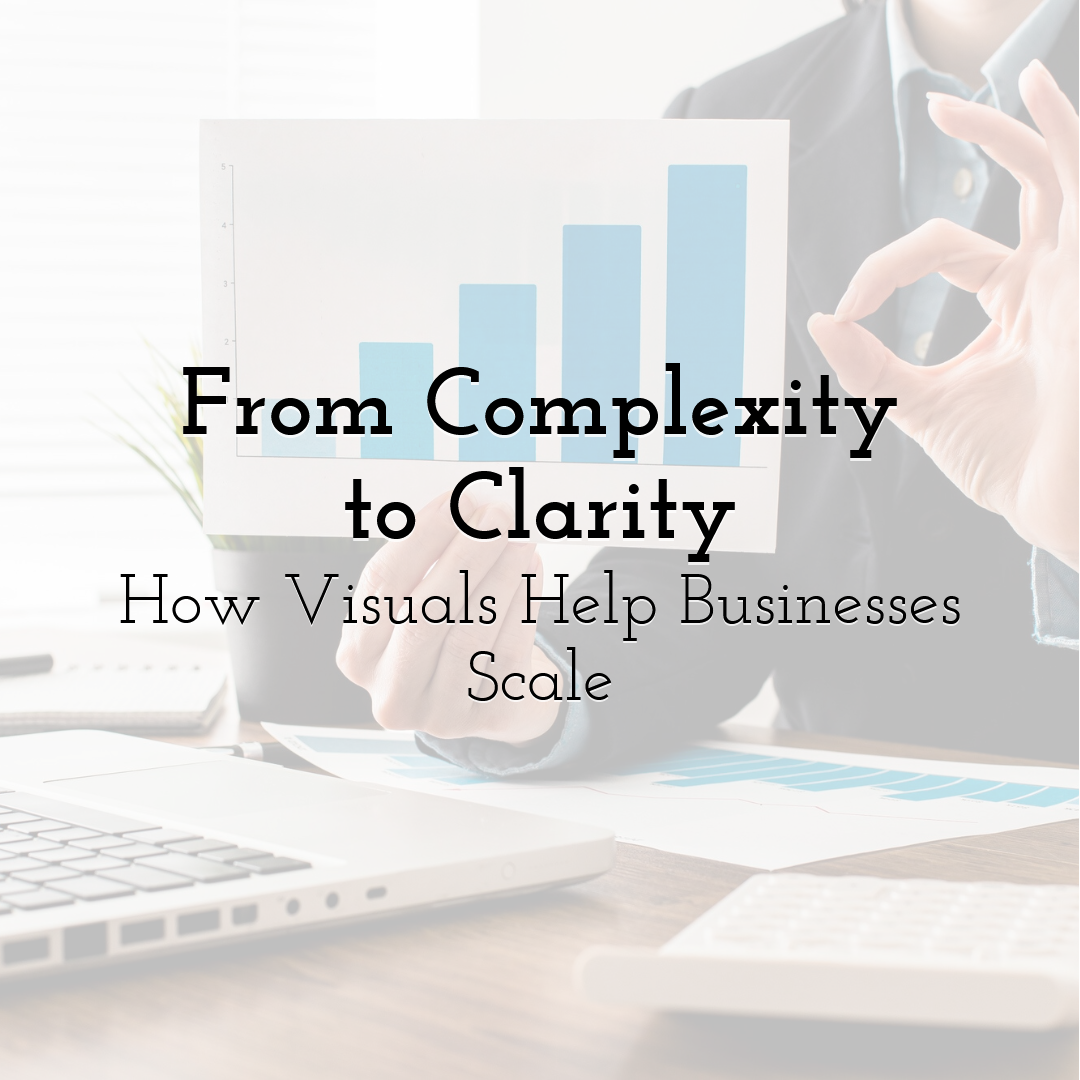
Growth sounds exciting on paper. More customers -> More revenue -> More momentum.
But behind the scenes? Growth usually brings one thing first: complexity. More tools -> More data -> More people -> More moving parts.
Suddenly, simple decisions take longer, teams start pulling in different directions, and no one is fully sure they’re looking at the same version of the truth. Most businesses don’t struggle because they lack effort or information. They struggle because they lack clarity.
That’s where visuals come in.
Why scaling introduces confusion

As organisations grow, information spreads across systems, documents, and people. Performance data lives in dashboards that few fully trust. Numbers differ slightly between spreadsheets. Processes exist informally instead of being written down anywhere.
For example, imagine a team planning next quarter’s production. One manager looks at inventory reports, another uses last month’s spreadsheet, and a third relies on an informal workflow note. Conflicting numbers lead to duplicated effort and delayed decisions. This kind of misalignment is common, even among skilled teams.
When three people answer the same question three different ways, the issue usually isn’t capability. It’s the lack of a shared reference point. Without that shared view, alignment slips and decision-making slows.
Even small misalignments can cascade. A misinterpreted priority can delay projects, frustrate teams, and erode trust. Visuals prevent this by giving everyone a shared lens on what actually matters.
Clarity as an operating advantage
Clarity affects how confidently a business operates. When people understand what’s happening, what matters, and what needs attention, work moves forward with less friction. When they don’t, time gets eaten up validating basics instead of executing.
Teams hesitate when they don’t trust the information in front of them. Problems surface later than they should. Decisions feel heavier because the context isn’t clear.
When clarity is present, conversations stay focused, and execution sharpens. Teams act from the same understanding of reality, which reduces friction across departments and shortens feedback loops.
Like when a marketing team reviews campaign performance, visuals show which channels are underperforming so corrective action can be taken immediately, without waiting for multiple reports or approvals. This clarity keeps work moving and momentum high.
Where ERP systems fit into the picture
At a certain size, manual workarounds stop holding. That’s often when businesses start looking at ERP software for small businesses.
Platforms like MRPeasy help centralise operational data, especially for manufacturers dealing with:
- • Production workflows
- • Inventory levels
- • Resource planning
- • Order tracking
But here’s the key: Even with an ERP in place, people still need to understand what the data is saying. That’s where visuals start doing the heavy lifting.
Without visuals, an ERP is just a data warehouse. With visuals, dashboards, charts, and process maps, teams can interpret the data instantly and act with confidence.
Visuals as a translation layer

Visuals act as a translation layer between complexity and understanding. They reduce the mental effort required to process information and help teams focus on what actually matters.
They help people see patterns faster
Visual representation makes it easier to recognise:
- • Trends over time
- • Relationships between metrics
- • Outliers and risks
- • Cause-and-effect patterns
Charts, diagrams, and structured layouts turn abstract numbers into something tangible and easier to remember. For instance, a line chart showing monthly sales against forecast highlights trends instantly, whereas a table of numbers might require minutes to interpret.
And they reduce misalignment
Misalignment often comes from interpretation rather than disagreement. When information is presented visually, assumptions become visible.
Teams can:
- • Identify gaps
- • Question priorities
- • Align around the same reference point
Once your team shares the same understanding, ambiguity drops, and conversations become far more productive. Decisions are easier to stand behind as well, because the reasoning and data are visible to everyone.
This lowers the risk of duplicated effort or missed tasks, especially across teams that rarely meet in person.
Using visuals with intent

Different visuals solve different clarity problems. The most effective organisations choose them deliberately, based on the decision or understanding they need to support.
- • Using data visualisation to make smarter decisions. Data visualisation helps surface trends and risks that are hard to detect in spreadsheets or text-based reports. A well-designed chart can show changes over time, highlight outliers, or expose relationships between metrics. The value lies in focus. Dashboards work best when they prioritise decision-critical information rather than trying to reflect everything that can be measured.
I.e.: A dashboard highlighting only at-risk projects lets a project manager act immediately, instead of getting lost in dozens of less relevant metrics.
- • Turning data into stories people can act on. Data becomes useful when it’s placed in context. Visual storytelling connects metrics to goals, progress, and outcomes, helping teams understand not just what is happening, but why it matters. Visual assets created with tools like Pixteller can be reused across updates, planning sessions, and stakeholder communications, which helps maintain consistency in how information is interpreted over time.
- • Clarifying processes with diagrams and infographics. Process complexity is a common scaling challenge. As workflows expand, responsibilities and dependencies become less visible. Diagrams and process maps make these relationships explicit, reducing reliance on informal explanations and helping teams navigate change with more confidence.
For example, mapping the end-to-end order fulfilment process visually makes it clear who owns each handoff and where bottlenecks could arise.
The operational impact of visual clarity

When priorities, processes, and performance are visible, teams can coordinate without constant check-ins or clarification.
Improving collaboration and team alignment
With shared visuals, you see the same priorities, responsibilities, and progress as the rest of your team. You won’t waste time clarifying assumptions or chasing updates. Handoffs become smoother, cross-functional projects move faster, and you can keep everyone aligned without constant check-ins.
Teams can instantly see who is working on what, which reduces confusion on large initiatives and keeps projects moving even when schedules shift unexpectedly.
Making faster, more confident decisions
With visual summaries, you can see trends, risks, and bottlenecks at a glance instead of digging through multiple reports. You get the information you need to prioritise actions immediately, reduce delays, and prevent small problems from becoming bigger ones.
This might mean spotting a drop in sales in a key region that allows marketing and sales teams to adjust campaigns or reallocate resources before targets are missed.
Increasing efficiency and reducing overload
When you use visuals, you cut down the back-and-forth that slows your team. Everyone knows what tasks are urgent, who owns each step, and how workflows connect. You spend less time answering repeated questions or clarifying priorities and more time focusing on the work that actually moves the business forward.
Visual clarity reduces cognitive load: teams spend less time double-checking or clarifying, which means more energy goes into high-value work.
Designing visuals that actually drive performance
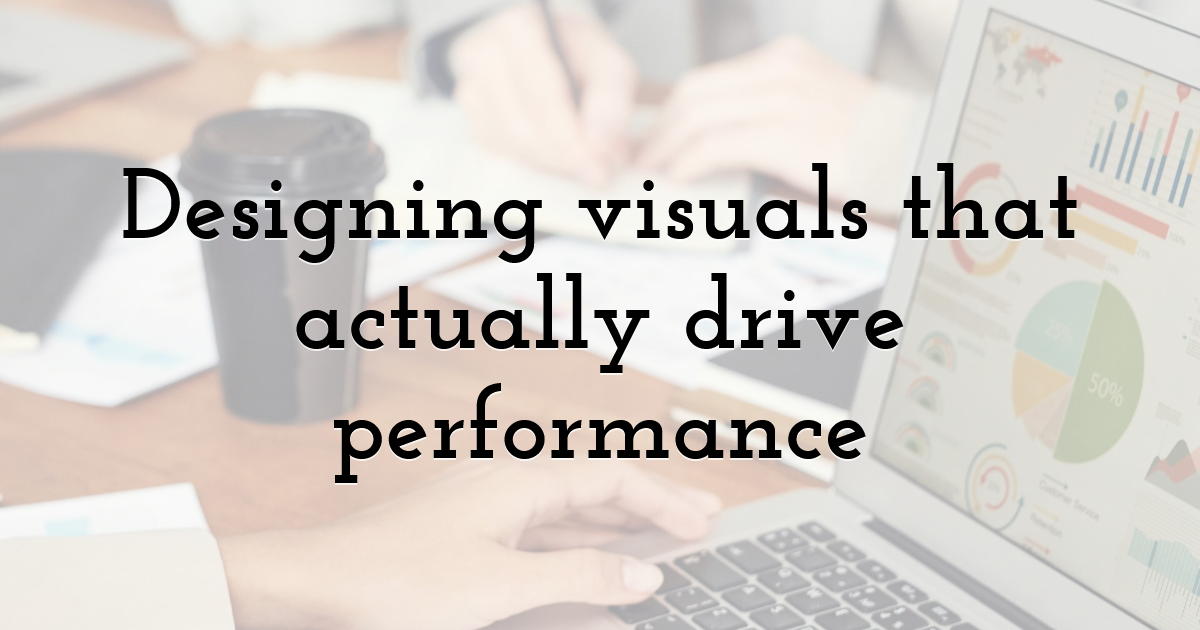
Visual clarity doesn’t happen by accident. You have to design it intentionally, test it, and make sure it actually helps your team make better decisions.
Every visual you create should have a clear purpose. Ask yourself: Does this chart, diagram, or dashboard support a decision, an action, or a shared understanding?
Anything that doesn’t should be removed. Simpler visuals make it easier for your team to see what matters, remember it, and act on it.
You don’t need complicated tools to get this right, either. Pixteller lets you build and iterate visuals quickly, so your team can experiment without slowing down other work.
Tip: Try iterating one visual at a time. Test what people understand immediately, remove anything confusing, and see if decisions or actions improve as a result.
Measuring the impact of visuals on growth
The real test of a visual is whether it changes behaviour.
Are decisions being made faster? Are your teams aligned on priorities? Is work moving forward more smoothly?
If a visual doesn’t help you act or reduce friction, it isn’t doing its job.
Start by tracking outcomes that actually matter. Look for changes in how your team operates, for example:
- • Fewer meetings or check-ins needed to align on the same information
- • Faster identification of risks or bottlenecks
- • Quicker prioritisation and reassignment of tasks
- • Fewer errors or delays because responsibilities and processes are clear
- • Updates being shared and understood without repeated follow-ups
You can also track qualitative impact: Are team members more confident in their work? Do they raise fewer clarifying questions? This shows whether visuals are truly shaping behaviour.
Clarity is what lets growth keep working

Complexity will keep increasing as businesses grow. That part is unavoidable.
Confusion is not.
Visuals help organisations manage complexity by making information understandable, shared, and actionable. They reduce friction, improve decision quality, and support better execution as scale increases.
For growing businesses, investing in visual clarity isn’t about presentation. It’s about making growth easier to sustain.
When clarity is baked into your processes, every team can act with confidence, anticipate issues, and keep momentum even as scale introduces more moving parts. That’s the real advantage of visual clarity.
Until next time, Be creative! - Pix'sTory
Recommended posts
-
When to Stop DIYing Operations and Start Outsourcing
Read More › -

How to Build AI Agents for Your Small Business Without a Dev Team
Read More › -
Why Simplicity Is Becoming the Most Powerful Business Strategy
Read More › -

How Does Fibre vs Dedicated Internet Access Affect Business Operations?
Read More › -
From Complexity to Clarity: How Visuals Help Businesses Scale
Read More › -

How to Build a Customer Loyalty Program Without a Big Tech Stack
Read More ›