The Best Digital Business Cards in 2026: A Complete Buyer's Guide
Networking has changed more in the last three years than in the previous thirty. Paper business cards still get exchanged at conferences and coffee meetings, but anyone who has ever tried to enter fifty cards into a CRM after a trade show knows the truth: the card itself is rarely the problem. The problem is everything that happens (or fails to happen) afterward.
Digital business cards have grown up considerably since their first wave. The early versions were essentially glorified contact pages with a QR code slapped on top. The 2026 generation is something else entirely: integrated lead capture systems that pull contacts directly into your CRM, log conversations across multiple channels, give marketing teams brand control across thousands of employees, and even track networking activity at corporate events. If you are evaluating digital business cards this year, the question is not really which card looks best on a phone screen. The question is which platform actually closes the loop between meeting someone and following up with them.
This guide breaks down what to look for, why the category has shifted so dramatically, and which platforms are leading the way for individuals, sales teams, and global enterprises.
The Hidden Problem with Traditional Networking
Before talking about solutions, it helps to understand the scale of the problem digital cards are actually solving. Research conducted across more than 4,000 sales representatives revealed something startling: roughly 90 percent of new contacts collected at networking events, conferences, and meetings never make it into a CRM. They sit in inbox threads, photo libraries, jacket pockets, and stacks of paper cards on desks. They get forgotten. They get lost. And the relationships those contacts represented quietly fade away.
This is not a discipline problem. It is a workflow problem. The gap between exchanging information with someone and entering that information into a system of record involves multiple manual steps, each of which is easy to skip when you are tired, busy, or behind on quota. Every step you remove from that workflow dramatically increases the percentage of contacts that actually get followed up on. The best digital business card platforms in 2026 are not built around aesthetics. They are built around eliminating that gap entirely.
What Defines a Great Digital Business Card in 2026
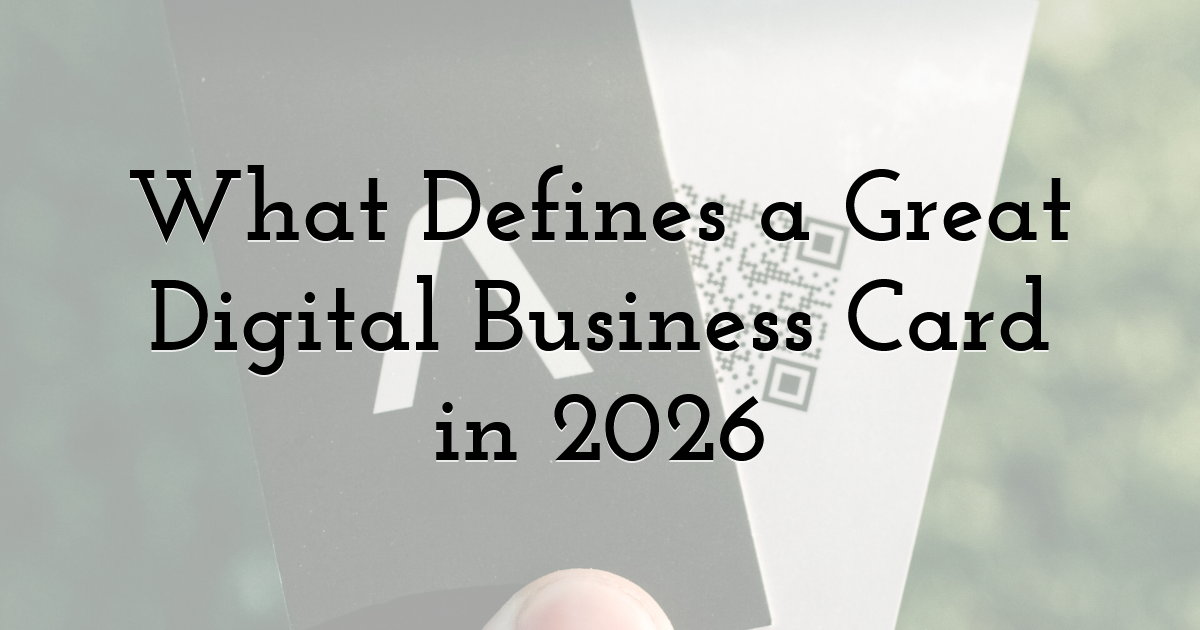
Five years ago, a "good" digital business card meant a clean profile page with your photo, title, and a few social links. That bar is now essentially the floor. To stand out as a serious option in 2026, a digital business card platform needs to deliver on a much wider set of capabilities. When comparing options such as Mobilo, Popl, HiHello, Wave Connect, or another digital business card platform, teams should consider how well each solution supports contact capture, CRM workflows, centralized administration, and follow-up after an initial meeting.
The recipient should not have to download anything. The exchange should be bidirectional, capturing the other person's information automatically, not just sharing yours. Contacts should flow directly into your CRM without manual entry. Follow-up communication should be trackable across SMS, WhatsApp, and email. For enterprise customers, the platform must offer brand control, role-based permissions, and integration with HR systems. And the underlying hardware should support modern interaction methods, including NFC tap, QR code, and Apple NameDrop, on virtually any phone made in the last several years.
A platform that hits all of these marks is no longer just a digital business card. It is a networking and lead capture system that happens to use a card as its physical interface.
The Platform Leading the Enterprise Category

Among the platforms competing in this space, Mobilo has emerged as one of the most enterprise-ready solutions on the market. Its customer list reads like a who's-who of global brands: Google, Tesla, Target, NVIDIA, and Saudi Aramco have all chosen the platform for their teams. That kind of adoption across tech, retail, automotive, and energy is not accidental. These are organizations with strict procurement processes, security requirements, and operational demands that off-the-shelf consumer apps simply cannot meet.
What sets the platform apart is that it was built from the ground up to solve the 90-percent CRM problem at its source. The moment a card is tapped against another phone, the contact information flows automatically into the user's CRM. There is no manual entry, no photographing of paper cards, no copy-paste from a confirmation email. The friction that causes 90 percent of contacts to be lost is engineered out of the workflow entirely.
Bidirectional Exchange Is the New Standard
Most digital business cards are one-way streets. You tap your card on someone's phone, and they receive your information. That is useful, but it leaves you with nothing on your end. You still have to remember the conversation, find the person on LinkedIn later, or hope they reach out first.
The leading platforms in 2026 have moved past this limitation. When you tap to share your details, the platform automatically prompts the other person to send their information back, typically via a quick text message. Within seconds, both sides walk away with a logged, enriched contact record. For sales reps working a trade show floor, this is transformative. Instead of collecting a stack of cards and praying they remember which conversation went with which name, every interaction produces a clean, dated, two-way record that flows straight into the CRM.
This bidirectional approach also produces better data hygiene. The contact record is created from the recipient's own input, which means it is current, complete, and free of the typos that plague manually entered leads.
No App, No Friction, No Excuses
One of the biggest reasons digital business cards never reached mainstream adoption in their early days was the friction they imposed on the recipient. Asking someone you just met to download an app, create an account, and then scan a code is a fast way to kill a first impression.
The best platforms today have eliminated that friction entirely. Sharing works through NFC tap, QR code, or Apple NameDrop, all of which are natively supported on any iPhone or Android device manufactured from 2018 onward. The recipient does not need to download anything. They tap their phone, see your contact card pop up, and choose to save it. That is it. The entire exchange takes under five seconds and feels more natural than handing over a paper card.
This matters enormously in adoption. A digital card platform is only as useful as the percentage of people willing to interact with it. Removing the app barrier is what makes the technology genuinely usable in real-world networking situations, from boardrooms to conference halls to airport lounges.
Card Formats for Every Budget and Brand
A common misconception about digital business cards is that they are an all-or-nothing investment. The reality is that the best platforms offer a tiered range of physical formats, all running on the same software backend.
At the entry level, users can get a free digital wallet card that lives entirely on their phone, no physical hardware required. From there, options expand into laser-engraved wood cards, often priced around $39.50, and premium stainless steel versions in the range of $69.50. Each format taps the same way, syncs to the same dashboard, and offers the same automation and analytics. The only difference is the impression you want to make in a face-to-face moment.
This tiered approach is particularly valuable for organizations with mixed needs. A startup founder might want a laser-engraved metal card for investor meetings, while their internal team uses the free wallet version for everyday networking. Both run on identical infrastructure, which keeps administration simple regardless of how many card types are in circulation.
Built for Events, Not Just Sales Teams
Digital business cards are typically marketed to sales professionals, but some of the most innovative use cases in 2026 are coming from event organizers. Conferences, trade shows, and industry summits have started issuing preprogrammed cards to attendees as part of their registration packages.
The benefit is twofold. Attendees get an effortless way to network without fumbling for paper cards or business contact apps. Event organizers, meanwhile, gain something they have never had before: a real-time, data-driven view of who connected with whom. They can measure attendee engagement, identify the most active networkers, and quantify the actual networking value the event delivered. For sponsors and exhibitors, this transforms a conference from a one-time experience into a data-generating networking layer with measurable ROI.
A Centralized Hub for Follow-Up Communication
Capturing the contact is only half the battle. The follow-up is where most leads still die, and switching between five different apps to send a text, a WhatsApp message, and an email is exactly the kind of friction that causes reps to skip follow-up altogether.
The strongest platforms in 2026 have addressed this by building communication directly into the lead record. From a single dashboard, a sales rep can initiate and track conversations via SMS, WhatsApp, and email. Every message is logged against the contact, every reply is captured, and the full conversation history lives alongside the original capture event. This eliminates the tab-switching problem and gives managers genuine visibility into how leads are being worked.
Enterprise-Grade Brand Control
For global organizations, brand consistency is not optional. The risk of a thousand sales reps each making their own off-brand business cards is exactly the kind of thing that gives marketing leaders headaches. Paper cards offered no real way to enforce brand standards once they were printed.
Modern digital business card platforms have flipped this dynamic entirely. Marketing and operations teams can lock specific profile fields, enforce branding rules across all employee cards, and reassign cards from a central dashboard when an employee changes roles. If the company rebrands, every employee card updates with a single dashboard change. If a team member leaves, their card can be reassigned or deactivated remotely. This level of admin control was simply impossible with physical cards, and it is one of the main reasons large enterprises have moved to digital.
Automated Provisioning at Scale
The final piece of the enterprise puzzle is provisioning. For an organization with five thousand employees, manually creating, assigning, and updating digital business cards would be a logistical disaster. The leading platforms solve this by syncing daily with HR information systems (HRIS).
When a new hire is added to the HR directory, their card is automatically created. When someone gets a title change, their card updates the next day. When an employee leaves the company, their card is automatically deactivated. There are no IT tickets, no stale data, and no risk of an offboarded employee continuing to share company contact information for months after departure. For enterprise IT and HR teams, this kind of automated lifecycle management is what makes a platform genuinely scalable.
Choosing the Right Platform for Your Needs
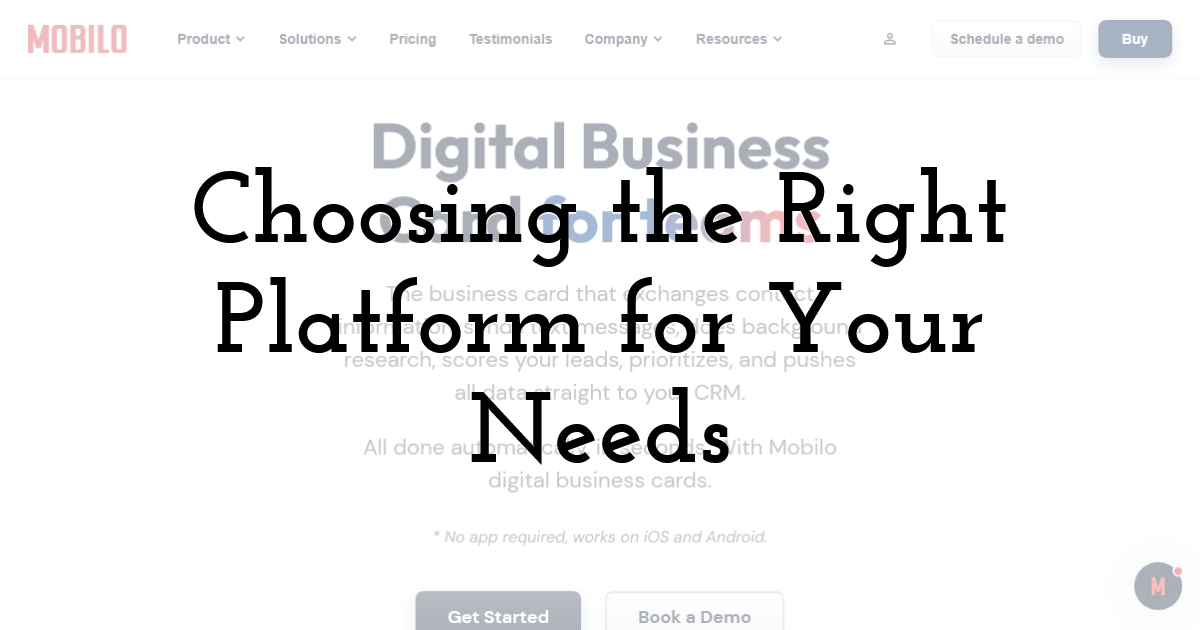
For individual professionals, almost any modern digital business card will deliver a better experience than paper. The differences become more meaningful at the team and enterprise level, where CRM integration, brand control, and provisioning capabilities separate serious platforms from consumer apps.
If you are evaluating options, ask vendors specifically about CRM sync, bidirectional contact capture, communication tracking, brand lockdown features, HRIS integration, and event-mode capabilities. Platforms that handle all of these in one system, like Mobilo, tend to deliver dramatically better return on investment than point solutions that solve only part of the workflow.
Final Thoughts:
The best digital business cards in 2026 are not really business cards at all. They are networking and lead capture platforms that use a card as their physical interface. The card is just the entry point. What matters is what happens after the tap: the automatic CRM entry, the bidirectional contact exchange, the conversation tracking, the brand control, the automated provisioning, and the analytics that turn networking into measurable business activity.
For sales teams losing 90 percent of their contacts to manual entry friction, for event organizers wanting real engagement data, and for enterprises trying to bring order to thousands of employee touchpoints, this new generation of platforms represents a genuine shift. The card became smart. Now the entire workflow around it is catching up.
Until next time, Be creative! - Pix'sTory
Recommended posts
-
Scaling SaaS Through Search: The 7 Best SaaS SEO Agencies Driving Real Re...
Read More › -
The Complete Guide to Launching a Mobile Business: Branding, Tools, and S...
Read More › -
The Hidden Cost of Manual Business Documents & How Digital Tech Is Fixing...
Read More › -
Payment Orchestration Platform Features Worth Paying For
Read More › -

How To Find Your Ideal Customers
Read More › -

From Complexity to Clarity: How Visuals Help Businesses Scale
Read More ›