7 Best AI UGC Video Generator Tools for Social Media Ads in 2026
The production process is radically transformed. The days of coordinating with creators, scheduling, and waiting weeks for video content are now behind us. The quality of the technical output is now good enough that the content AI-generated would be presented alongside human content in social feeds without being flagged as clearly “AI”-created. This change has led to a wide variety of tools that are structured around various workflows and various needs and priorities for different teams.
Some platforms focus purely on speed and simplicity, stripping away features to get you from script to video in minutes. Others have taken the avatar's realism and natural movements to the extreme, especially when it comes to choices and moments that matter to the viewer's milliseconds of decision-making between watching or scrolling. A handful are aware of the exact challenges that marketers are presented with when attempting to switch from product info to creative that can be tested without context switching. These tools are a combination of the big names and newer ones that have made a niche for themselves in this growing market. They all address a specific issue, and the best option is based on the needs of your team at this time.
1. Intellemo AI — Cinematic Storytelling With Authentic Feel
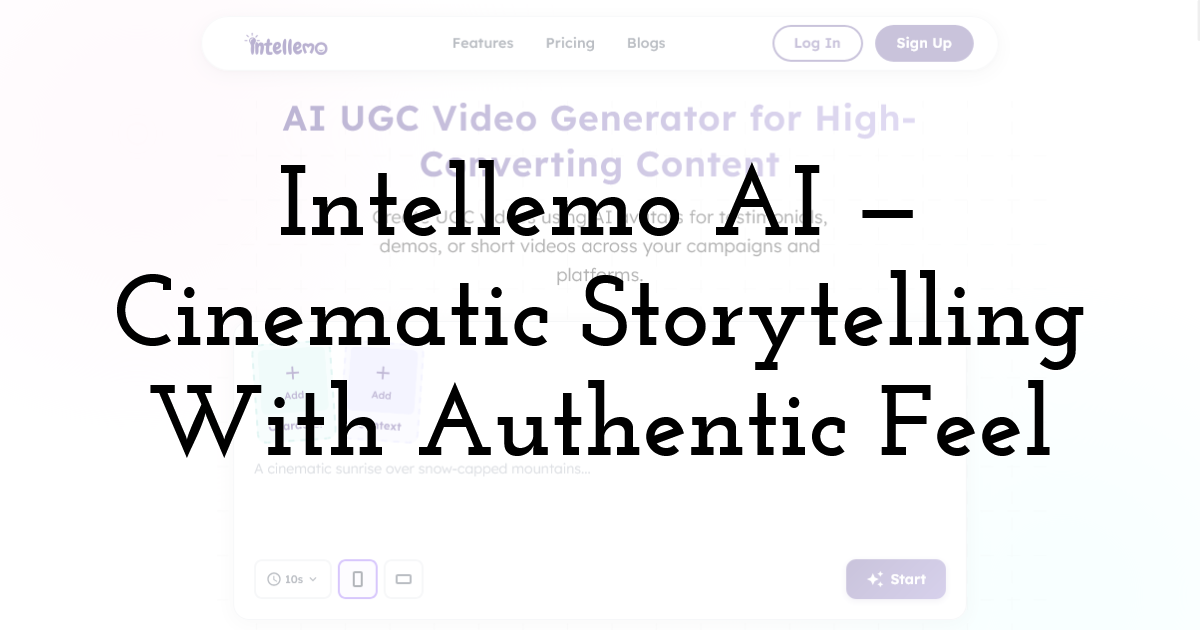
Intellemo AI redefines the capabilities of UGC style ads on TikTok, Instagram Reels, and Meta, creating multi-scene stories that slow down the scroll. It works as a powerful AI UGC Video Generator for brands that want creator-style content without traditional production delays. Instead of boring talking head videos, AI avatars are created with natural movements and micro-expressions that align with the most popular social ad formats used by creators and that capture attention in today's fast-moving feeds. All work is done in one environment: the writing of the script, the storyboard, the creation of the visuals, and the final export, and every step will take you from product brief to tested ad in hours, not weeks, and without having to coordinate with creators. The multilingual lip-syncing allows brands to create UGC ads tailored to every region without the robotic look and feel that hinders UGC engagement in performance ads.
The unique selling point of this tool for paid social is the integration with campaigns. You create the video, after which it's directly uploaded to Meta or other platforms for A/B testing without manual uploads or delays in setting up the campaign. Teams say that the movie-style video actually improves the number of conversions compared to simple avatar videos, as it engages viewers' attention for longer. It is their exact feature when launching a new e-commerce product, where you have to test several different angles from unboxing scenes to problem-solving stories to benefit-driven demos of your new product. This is great for ads that are running at scale; with With Intellemo AI you can generate dozens of variations for your paid social testing without coordinating with a set of real creators.
2. HeyGen — Realistic Avatar Cloning and Multilingual Reach
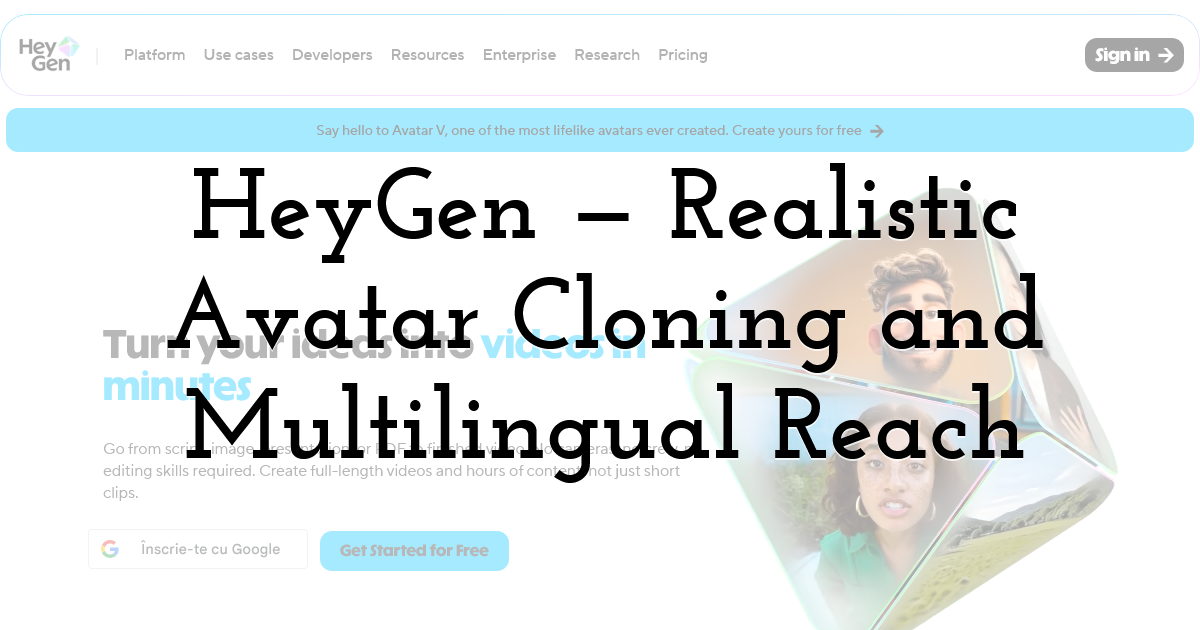
With its stability and versatility in language and avatar options, HeyGen has emerged as the go-to solution for teams seeking a high-quality avatar platform that delivers language flexibility. The site focuses on realistic avatar cloning technology that allows you to upload video footage and get a virtual copy of you that is as close as possible to your physical appearance, mannerisms, and speech patterns. The voice cloning also contains emotion regulation, permitting you to tweak tone and energy without re-recording or making additional footage, saving a lot of production time. The platform can also be used in many languages, with natural voice synthesis and accurate lip-sync for teams launching campaigns in various regions and markets all around the world. The library of avatars is also large and includes options for all ages, ethnic groups, and professional styles, allowing you to have a lot of representation choices.
Teams love the screen recording feature, which allows them to incorporate avatar speech with product demos or presentations, making it more than just a UGC tool. HeyGen is ideal for established brands, corporate communications, and teams that are developing localized campaigns in many markets where maintaining consistency is paramount. The platform is better at being polished and professional than it is at being raw, authentic UGC, making it great for enterprise and corporate uses.
3. InVideo — Template-Driven Speed With Professional Output
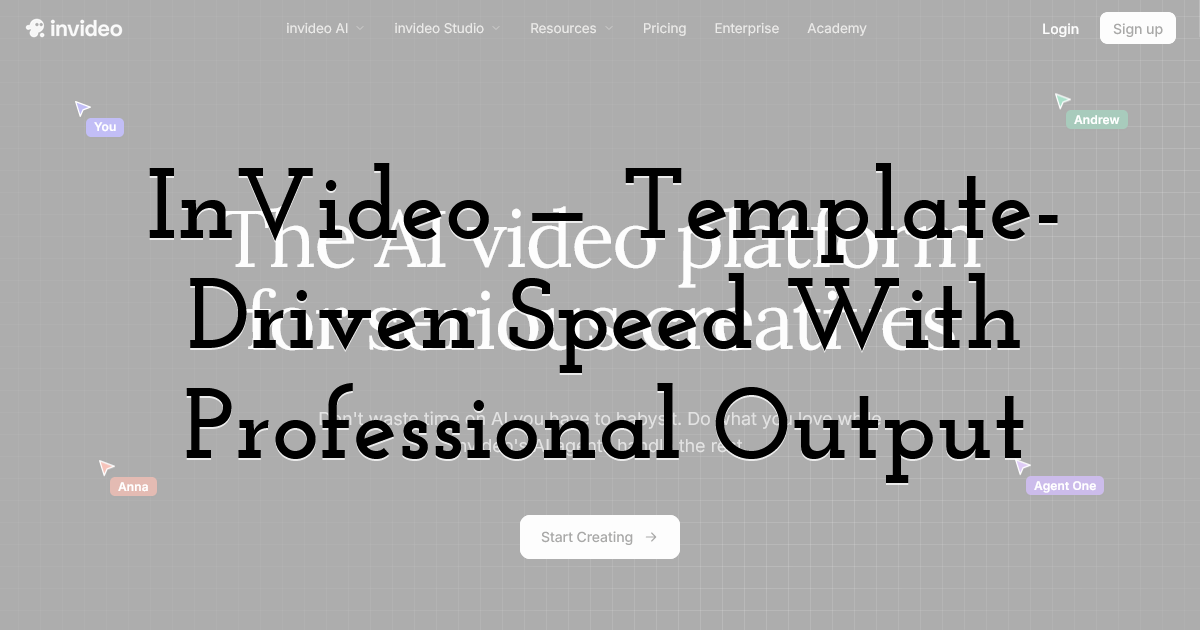
InVideo takes a template-based approach to video creation, which means fast production for teams that want professional results without learning complex tools or spending weeks on design. The platform offers extensive templates specifically designed for social media ads, product launches, and promotional content, with thousands of options covering different industries and styles. You can swap text, add your product images, and generate finished videos quickly, which keeps the workflow frictionless for non-technical users. The AI-powered editing features suggest scene transitions, music, and visual effects that match your content, removing guesswork from the editing process.
InVideo's strength lies in the breadth of templates combined with intuitive customization options that don't require prior video experience. The platform is particularly useful for teams that want to move fast without customizing every aspect of the video, letting you maintain consistency across campaigns. Teams appreciate the built-in stock music library and permission to use everything commercially without worrying about licensing complications or copyright issues. InVideo works best for SMBs and agencies that need consistent quality without extensive production knowledge or dedicated video teams.
4. Zeely — Product-Page-to-Ad Without Tool Juggling
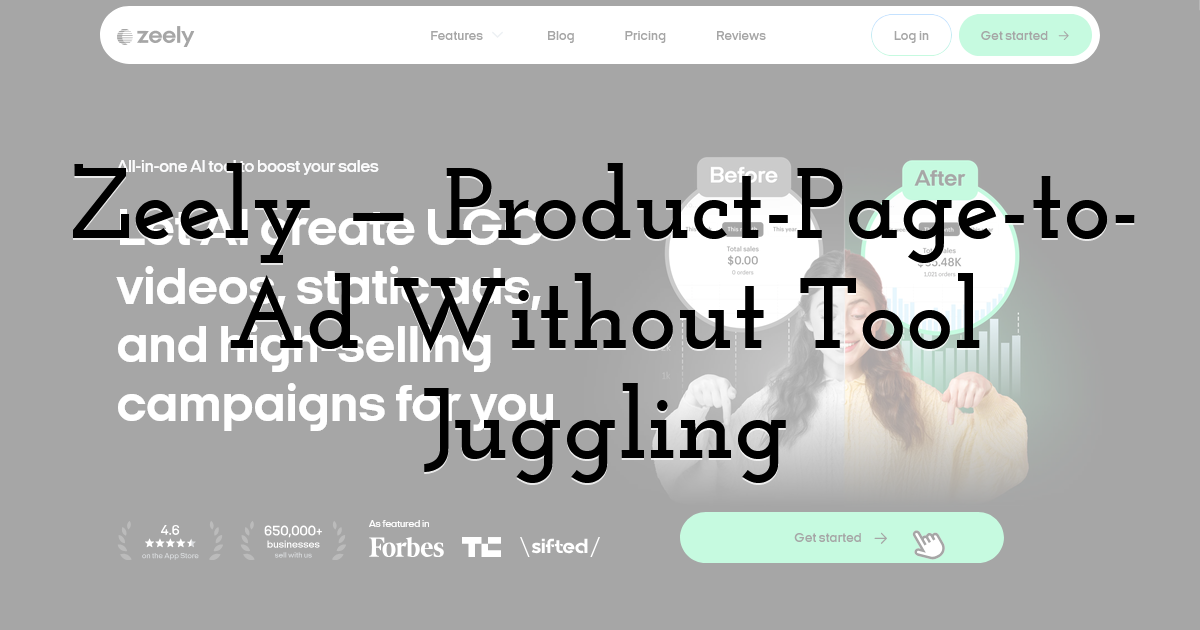
Zeely solves a specific friction point that small teams face constantly: moving from product information to testable creative without opening multiple tools and managing different interfaces. Import your product directly from your website, and Zeely pulls product images, descriptions, and key selling points automatically, eliminating manual data entry. The platform generates avatar videos that feel like authentic customer recommendations rather than corporate marketing, which makes them more effective in social feeds. You can edit scripts, swap avatars, and create variations for testing all in one place, and importantly, the testing data lives where you created the content.
Avatar selection is fast because the platform suggests options based on your product category and target demographic, removing decision paralysis. The interface is clean without being oversimplified, and you can batch create variations for testing multiple hooks and pain points simultaneously. Zeely is built for SMBs and growing DTC brands, not enterprises, and that focus shows in how the platform is designed from the ground up. The workflow keeps you from context switching between video creation and campaign management, which saves both time and mental load.
5. VIDEOAI.ME — Quality Avatars at Accessible Pricing
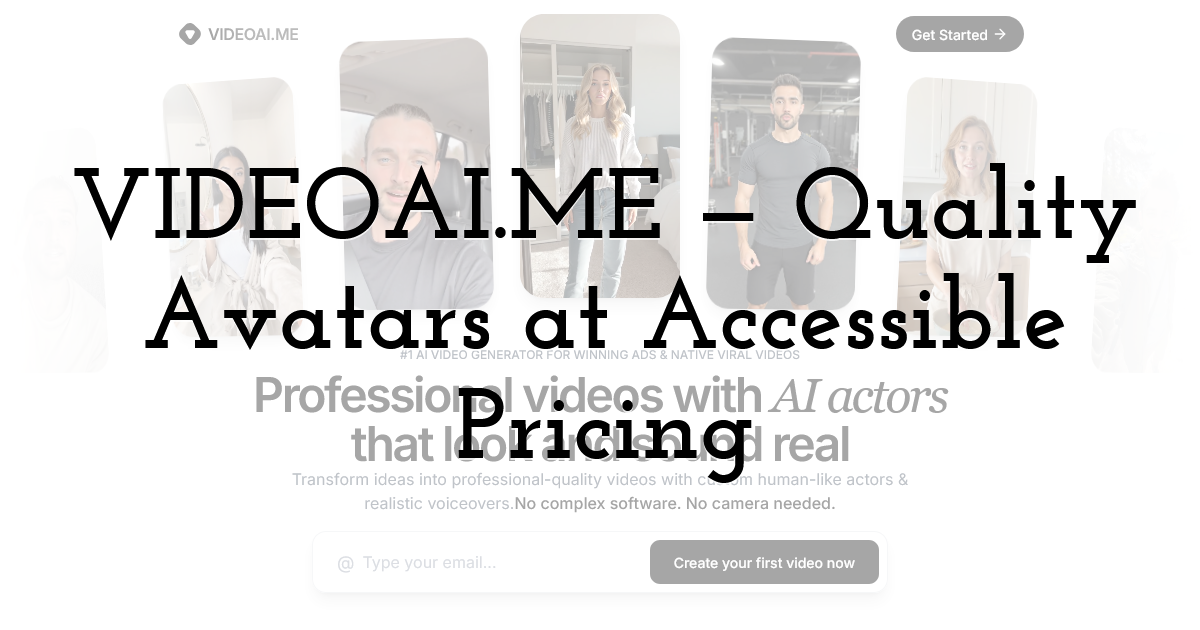
VIDEOAI.ME builds avatars from real, consenting creators and captures their micro-expressions, which means heads tilt naturally when speaking, eyebrows move with conversational intent, and the overall performance feels like a person rather than animation. The platform focuses specifically on UGC-style content for ads and organic social, so there's no bloat of unnecessary features that you will never use. You write a script, select an avatar, and have a finished video within minutes, making it genuinely fast for teams under time pressure.
The learning curve is minimal, which matters when you're onboarding team members or trying to scale production without training overhead. Teams talk consistently about the quality-to-price ratio when comparing to enterprise platforms that charge significantly more. Agencies building content for multiple clients appreciate the intuitive interface that doesn't require technical expertise, and creators testing different angles appreciate the speed of iteration. The tool does one thing well rather than trying to be everything to everyone, which actually makes it more useful for focused teams.
6. Colossyan — Custom Avatars and Branded Presenters
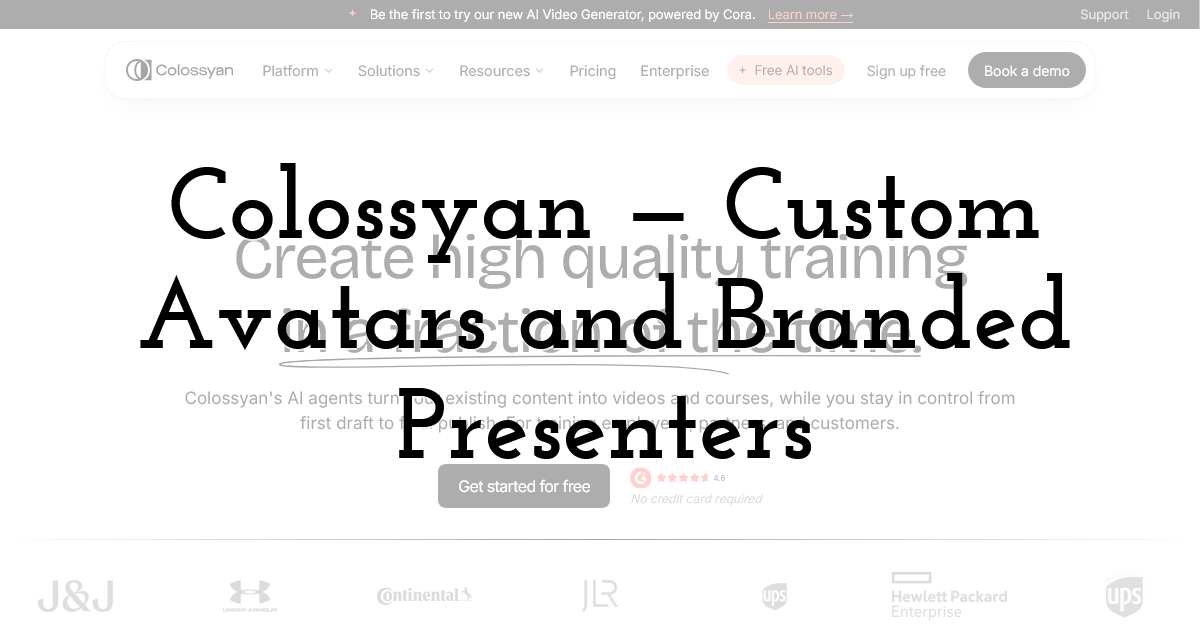
Colossyan takes a different approach to avatar creation that appeals to established brands with founder presence. Instead of browsing a library of pre-made avatars, you can upload video footage of your founder, CEO, or brand spokesperson, and the platform creates a digital twin that maintains their distinctive qualities. This matters significantly for consistency and brand recognition when your audience already knows your face and associates it with your company's message.
The platform maintains likeness and mannerisms while creating the digital version, so the avatar feels authentically like the person rather than a generic presenter. Your digital twin can speak different languages while keeping your face, voice tone, and gestures intact, which solves real problems for global teams running campaigns across multiple regions. Once you create your digital avatar, you can use it across testimonial videos, product demos, educational content, and social ads, making it a long-term asset. This approach works best for established brands building long-term content strategies around founder presence rather than teams wanting instant results without upfront investment.
7. MakeUGC — High-Volume Production at Lowest Cost
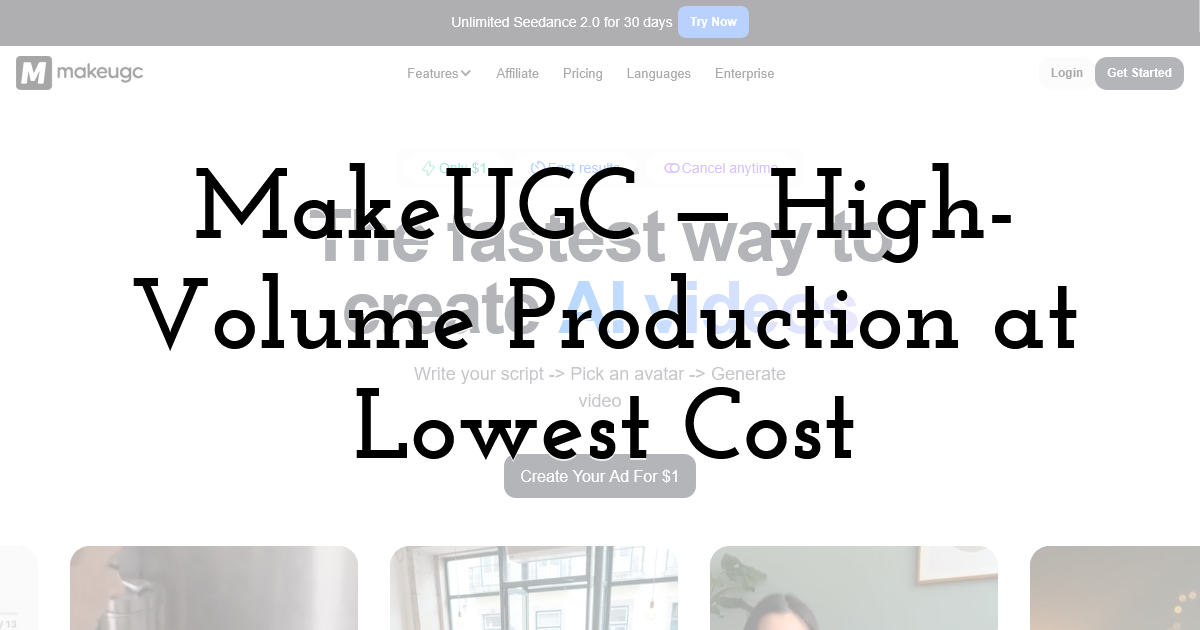
MakeUGC prioritizes speed and cost by stripping away complexity in favor of straightforward execution that doesn't slow down production. The interface is straightforward enough that it doesn't require learning: write a script, select an avatar from a simple library, and generate your video without overthinking the process. The per-video cost stays lower than competing platforms because the tool is built for volume testing and rapid iteration. You might create fifty variations of an ad before one wins, and MakeUGC keeps that testing approach financially viable without breaking your production budget.
The avatars look realistic enough that they work in social feeds without jumping out as obviously artificial, the editing is clean without unnecessary flourishes, and the output is immediately usable without additional post-production. This tool is best for performance teams and agencies running high-volume testing programs where speed and cost matter more than feature depth or customization options. If you know your workflow and want to execute it quickly without navigating complex interfaces, MakeUGC moves you in that direction efficiently.
Which Tool Is Actually Right For You
The choice depends on what matters most to your team right now and what your workflow looks like. Speed or depth, cost or customization, simplicity or integration.
If you are testing creativity at scale and cost is the primary driver, MakeUGC gets the job done efficiently without unnecessary features. If you are a small team wanting a clean workflow from product to campaign without switching tools, Zeely removes friction completely. If you want established technology with proven multilingual support at scale, HeyGen brings that reliability and extensive avatar options. If you need template-driven speed with professional output for teams without video expertise, InVideo handles that extremely well. If you are building long-term brand presence and have a recognizable founder or spokesperson, Colossyan's custom avatars become valuable assets. If you want realistic avatars without enterprise overhead, VIDEOAI.ME hits that middle ground perfectly. If you need a single platform that delivers everything in one place from cinematic quality to narrative depth with perfect sync and human-like avatars at affordable pricing, Intellemo AI can be the best fit for you. The right tool depends on your specific priorities among these different strengths and capabilities.
Start with free trials where available and generate the same product ad on a couple of platforms. Test the output against your current creatives to see real performance data. The results will tell you which tool actually fits your workflow faster than any review can. Most teams find they combine multiple platforms rather than settling on one exclusively, which is entirely normal since different tools solve different parts of content production effectively.
The advantage in 2026 isn't knowing which tool is objectively best. It's knowing which tool solves your specific problem and moving forward with testing quickly.
FAQs
Can I actually run AI-generated UGC ads on Meta, TikTok, and YouTube without getting flagged?
Yes. There are no platform bans on AI-generated UGC ads in 2026. Some regions require disclosure, so check current guidelines for your location before launching campaigns.
How realistic do these avatars actually look in social feeds when people are scrolling?
Realistic enough that people identify AI video correctly only 57% of the time. The best tools show natural movement, micro-expressions, and conversational pauses. Quality varies by platform.
What's the actual timeline difference when you compare AI video generation to hiring creators?
AI generates finished videos in minutes versus weeks with creators. Creating fifty ad variations takes hours with AI, weeks with human creators. The speed advantage is massive.
Until next time, Be creative! - Pix'sTory
Recommended posts
-
How AI Video Tools Are Changing A/B Testing in Marketing
Read More › -
How to USE an Animation Template to Create Your Own Video or GIF
Read More › -
From Rough Cut to Short: A Practical AI Video-Editing Workflow for Small...
Read More › -
How to Add Your Own Fonts on PixTeller Editor
Read More › -
How to Create a Mockup Image for Your Social media Campaigns
Read More › -

6 After Effects Project File Libraries Worth Knowing If You Want Faster,...
Read More ›