China Sourcing Agent vs Managed Packaging Partner: Which Should a Growing Brand Use?
You finally land a razor-thin factory quote, but who pays if the cartons arrive misprinted? For most U.S. importers, the choice is either a China sourcing agent or a managed packaging partner. With intermediaries everywhere, two questions decide the fit: how the go-between earns money, and who owns a failed run. This guide shows you when a lean agent is plenty, when full-service packaging protects the launch, and how to choose, on one page.
Quick answer: choose by complexity and accountability
Picture your packaging supply chain like a drive. For a short hop, you steer alone. For a cross-country trip, you want a co-driver who knows every detour.
That’s the split between a China sourcing agent and a managed packaging partner. One opens factory doors and checks prices; the other steers design, quality, and delivery until cartons reach your warehouse.
| Your need | Sourcing agent | Managed packaging partner | Hybrid (mix & match) |
|---|---|---|---|
| Order scope | Single product, plain carton | Multi-component, brand-critical system | Keep product factory, outsource packaging |
| Budget comfort | Under $10k total spend | $10k+ project budget* | Scales with SKU count |
| Accountability | You set specs; agent books inspection | Partner drives design, QC, and freight release | Split across dedicated experts |
| Best for | Fast trials, standard dielines | Color control, compliance files, launch deadlines | Solving chronic packaging issues without moving production |
Zenpack, the managed partner discussed below, states a $10,000 minimum project budget in its FAQ.
If the pack feels like a weekend errand, an agent is usually enough. When multiple SKUs, strict colors, or firm ship dates enter the picture, a managed partner can safeguard the timeline (and your sleep). You can also blend roles: keep the factory, add independent QC, or bring in a packaging specialist only where friction shows up.
In the next section we’ll pinpoint when an agent alone is truly enough and when those guardrails start to wobble.
When a sourcing agent is usually enough
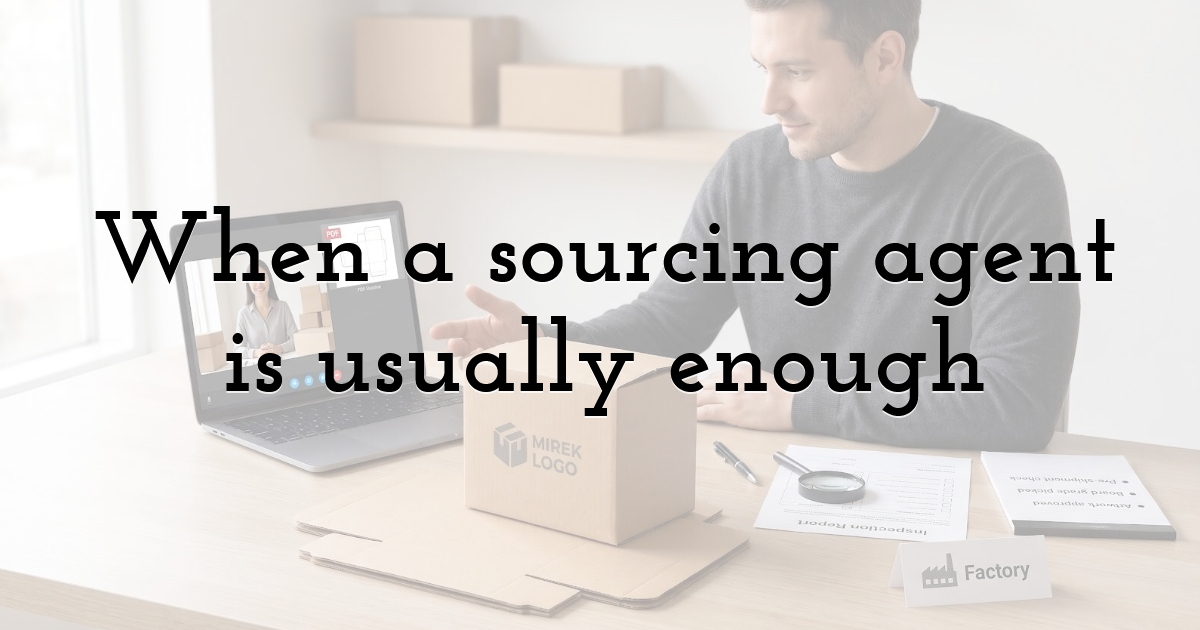
One box, one color, no moving parts: that sort of order prizes speed over coordination. A sourcing agent can reach factories fast, negotiate in the local language, and keep sample costs low. If the packaging budget is under $10k, the agent’s commission or flat fee often costs less than a full-service retainer.
You still control every step. Approve the artwork, pick the board grade, and release payment only after a pre-shipment check. Pair the agent with an independent inspector who samples to your agreed AQL under ISO 2859-1:2026; that modest step protects launch day at minimal cost.
Because the factory bills product plus packaging while the agent invoices service, your bookkeeper can line up the purchase order, goods receipt, and fee without guesswork.
Choose a sourcing agent when the pack is standard, the run is small, and you’re ready to own the outcome as well as the fix if something slips.
When a managed packaging partner starts to pay off
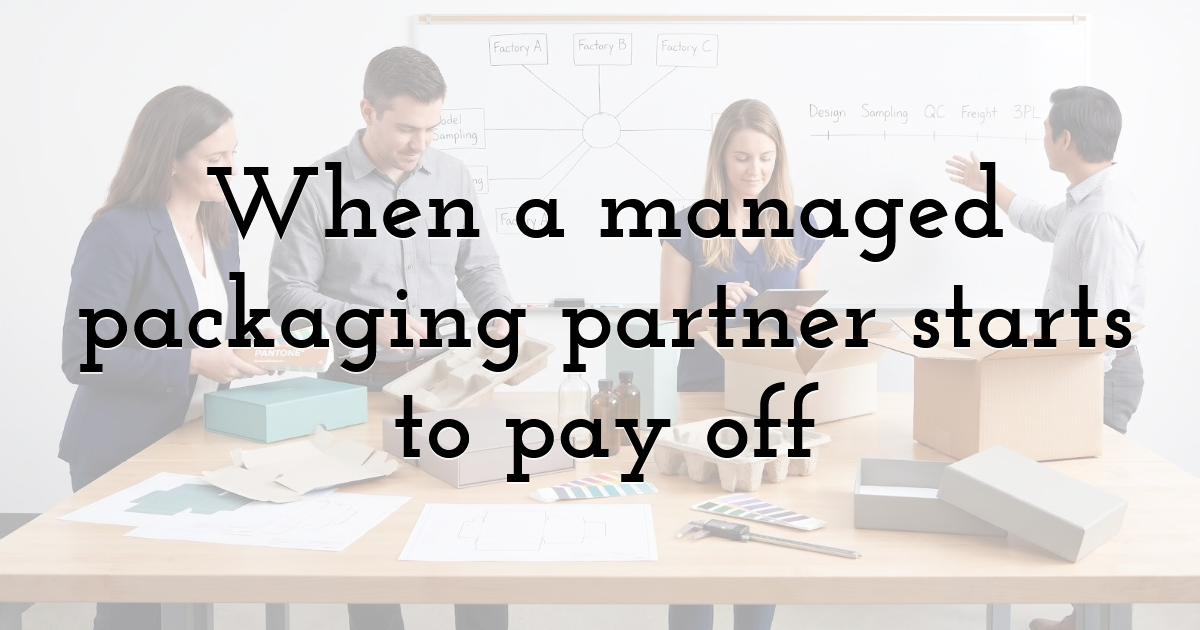
One example is San Jose-based Zenpack. It coordinates every project through a four-stage workflow (discovery, design-to-production handoff, intent-driven sourcing, and consolidated logistics), so brands deal with a one-stop partner for packaging instead of juggling several vendors.
Zenpack’s in-house design and quality teams stay engaged through pre-production samples and inline checks, with spectrophotometer color checks and, for parcel shipments, ISTA 3A testing, steps it outlines in its public quality-control guide.
For this level of oversight, Zenpack projects start at $10,000, a floor that screens out micro orders yet signals deep, hands-on service. Below that line, the agent route in the previous section is the better fit.
For multi-SKU launches or brands selling in both ecommerce and retail, this support often means fewer late surprises, tighter color control, and faster reorders. You pay a higher visible fee, but you also shed hours of coordination, plus the cost of missed shelf dates, once retail deadlines loom.
The two CFO questions
1. How the provider gets paid
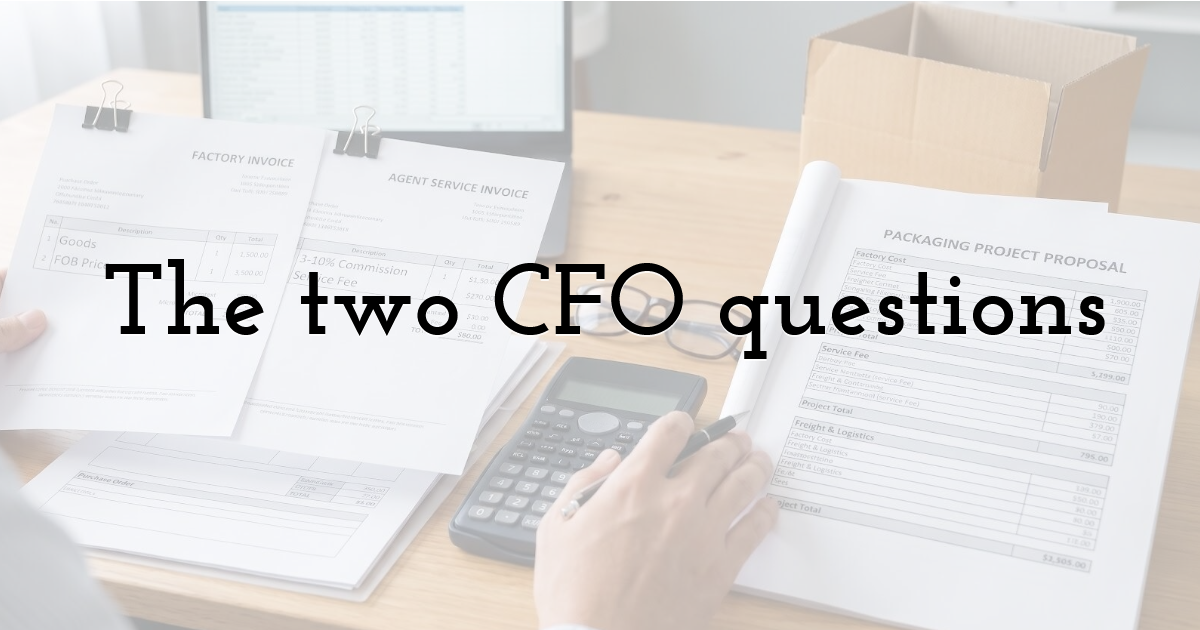
Most China sourcing agents work on a commission, and published fee guides put it at about 3 to 10 percent of order value. The factory invoices the goods, and the agent invoices service, so your accounts team can three-way-match the PO, receipt, and fee.
A managed packaging partner folds design hours, prototypes, tooling, inline checks, and warehouse hand-offs into one proposal. Good partners list each bucket so you still see factory cost, service fee, and freight in separate rows; great ones attach the unedited factory quote.
Red flags to probe:
- • Undisclosed supplier-side rebates or freight mark-ups
- • “Free” service paid only when the shipment clears
- • One all-in unit price with no cost breakdown
Ask for written disclosure of every revenue stream before you wire a deposit.
2. Who carries a bad run
Picture a shipment that lands with warped cartons and bleeding ink. Who shoulders the cost?
Responsibility has four faces:
- • Technical: who wrote and approved the spec?
- • Operational: who organises containment, rework, re-inspection?
- • Commercial: who is the seller of record on the invoice?
- • Financial: who issues credits or funds replacements and rush freight?
With a sourcing agent these layers split: you own the spec and PO, the factory sells the goods, and the agent may coordinate fixes for an extra fee. Every delay still hits your cash.
A managed partner closes the gap. They approve samples, direct QC, and often act as the contracting counter-party. When defects surface, one agreement lets you enforce timelines and offset costs without chasing three vendors.
No model erases risk. The safeguard is clarity up front: written scope, a signed golden sample, and liability caps you can live with. Lock those terms before the first board is cut, and you’ll sleep better when the truck door closes.
Quality assurance and inspection

Quality has two sides. First you build a process that prevents mistakes, then you sample the output to prove the plan worked. Many vendors blur that line, so we’ll keep it sharp.
Quality assurance lives in the technical files: dielines, color targets, board grades, transit tests. Miss one and no inspection can save the run.
Inspection is statistical. Under ISO 2859-1:2026, a general level II plan at AQL 2.5 might pull 125 units from a 3,200-piece lot; more than seven major defects triggers rejection. A pass never means zero defects; it means the sample stayed within the agreed AQL.
How the two models handle these steps:
- • Sourcing agent. You write the spec, approve the golden sample, and hire an independent inspector for the final check. The agent books the visit but rarely owns the findings, so you mediate any dispute between inspector and factory.
- • Managed partner. Their engineers vet the dieline, schedule inline checks, and stop the press if color drifts. Because they set the targets, they also own the fix. Your plant visit shifts from firefighting to spot-checking.
Either path works, provided everyone signs one spec, one sampling plan, and one go/no-go limit before the first sheet feeds the press.
Compliance, traceability, and sustainability
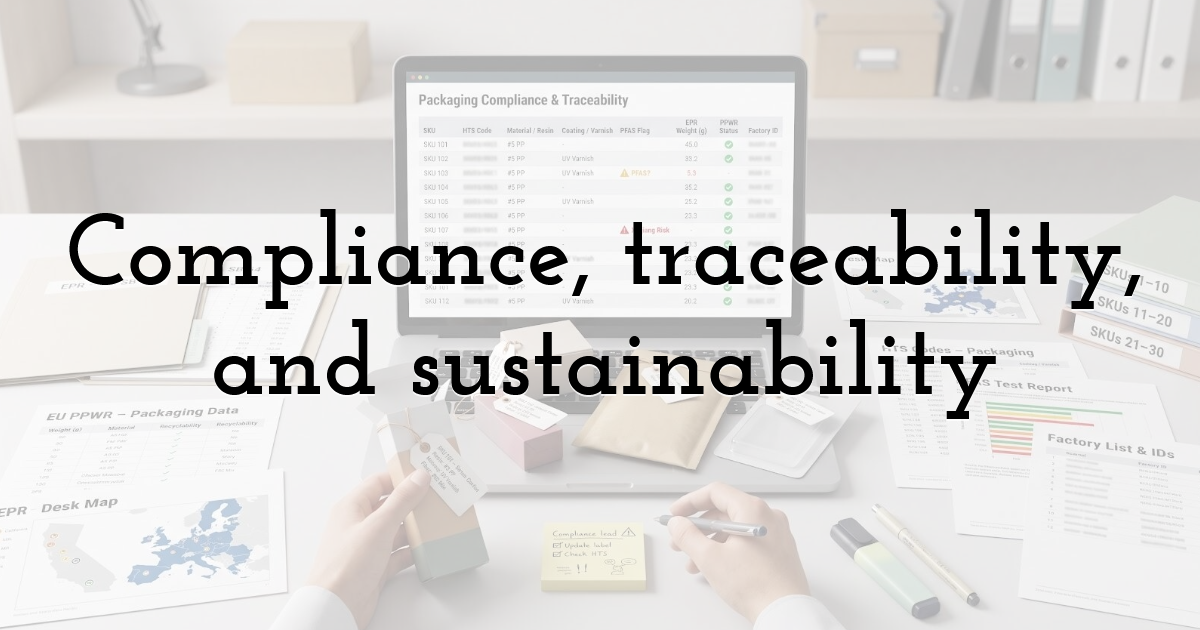
Rules shift faster than price quotes. Tariff exposure hangs on the eight-digit HTS code your broker checks against the USTR database. California’s SB 54 will bill producers based on the weight and material type of packaging they sell in the state, with fees planned from 2027. The EU’s Packaging and Packaging Waste Regulation (PPWR) began phased application on August 12, 2026. Whether you work through an agent or a managed partner, someone still has to chase that paperwork.
With only a few SKUs, you can often keep control yourself. Ask a broker to confirm duty rates, request basic material declarations from the factory, and file them with the purchase order. A sourcing agent can nudge suppliers, but the legal duty still lands on your desk as the importer of record.
Scale changes the game. Ten SKUs turn into fifty, each with its own varnish or adhesive. Tracking resin codes and upstream fiber sources becomes a job in itself. Managed partners build that traceability into their workflow: collecting component weights for state EPR reports, flagging PFAS-restricted coatings, and logging factory IDs in case a Xinjiang alert stops the container.
Sustainability adds another filter. A 2025 McKinsey survey of more than 11,000 consumers found price and quality outrank environmental impact, while recyclability tops the list of green factors that do matter. In other words, a lighter board cuts emissions only if the pack still protects the product.
The takeaway? Compliance and sustainability scale poorly in spreadsheets. If audits, label updates, and lifecycle claims are eating hours every launch, a partner with dedicated compliance staff can free your calendar and spare you last-minute scrambles. If they’re not, keep the reins yourself and spend the savings on marketing.
Finance and working-capital impact
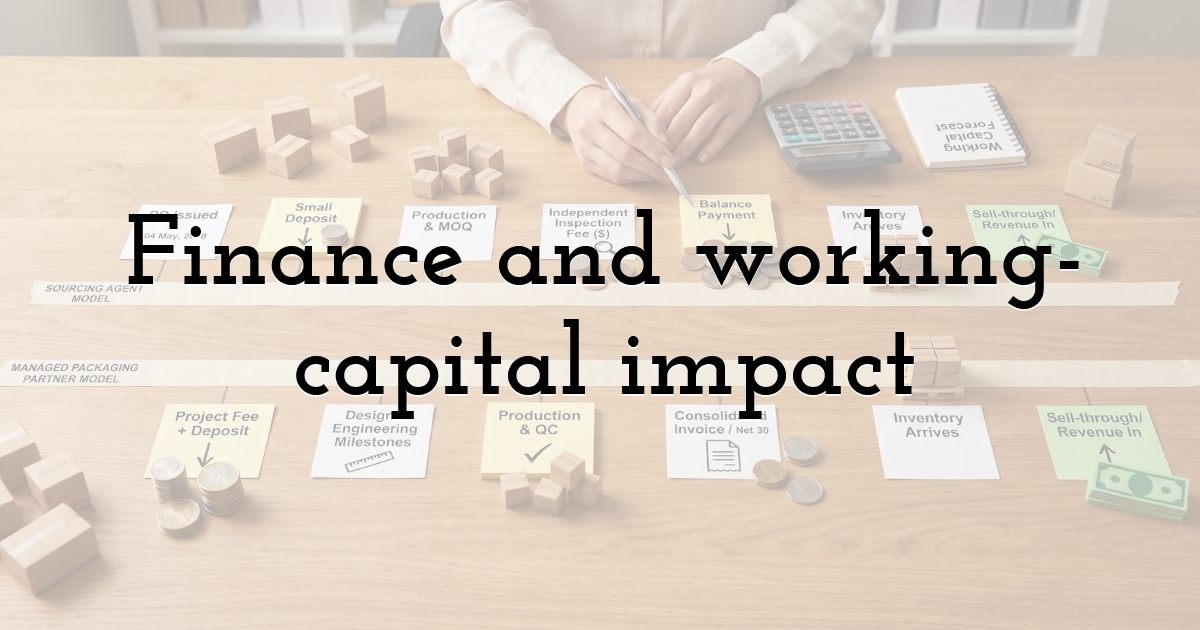
Cash flow loves clarity. When the factory issues one invoice and the agent another, your software can slot each amount into its own account: the purchase order matches the goods-received note, the invoice closes the loop, and gross margin shows up cleanly.
A managed partner cuts headcount but can blur coding. Design hours, tooling, freight, and warehousing often sit on the same bill. Convenience is real, yet silent costs hide in vague lines. Ask for an itemised proposal that lists factory price, service fee, freight, and warehousing so you assign every rupee or dollar to cost of goods, not overhead. IAS 2 treats these outlays as “other costs incurred in bringing the inventories to their present location and condition.”
Deposits and MOQs freeze cash long before revenue. A 30 percent deposit on a $15k packaging order ties up $4,500 the day you sign, plus balance payment weeks before sell-through. An agent may keep the deposit small but add coordination charges; a partner might win 30-day terms yet ask for a larger upfront project fee. Map every outflow against forecast inflows. If the gap hurts, negotiate staged deliveries or pilot runs.
Guard against write-offs. Unsellable boxes become inventory shrinkage. The fail-safe is simple: approve a golden sample, match receipts to spec, and hold final payment until inspection photos land in your inbox. Skip a step and you pay twice, once to make the pack and again to recycle it.
When an agent makes sense for a lean launch
Early-stage brands run on cash and speed. If the pack is a plain mailer, the dieline is locked, and a failed batch would hurt, but not sink, the business, keep the model light. Work with a vetted factory or a sourcing agent who can push MOQs down to pilot levels and translate those midnight WeChat threads. Budget for an independent final inspection (published rates run roughly $250 to $310 per inspector-day) to add one last set of eyes before release, then ship.
When a managed partner is the grown-up choice
Growth multiplies complexity. A beauty line may jump from three SKUs to twenty, each needing precise foil stamping and region-specific claims text. Miss the shelf date and you waste the retailer’s promo slot, not just your pride. At that point, a partner who owns design files, color targets, and freight bookings can safeguard the marketing dollars you’ve already spent.
When a hybrid model makes sense
If the product factory performs well but every shipment arrives with scuffed cartons, keep the factory and bring in a packaging specialist. Or let your sourcing agent handle components while an independent lab runs ISTA transit tests (Sealed Air, for one, lists ISTA 3-Series testing from $675 per test). Mix roles until each weak link has a clear owner, and a measurable fix.
When to reassess the whole setup
Watch for signals: defect rates creeping above your agreed AQL, SKU lists that outgrow a single spreadsheet, or weekly scrambles to compile EPR weight data. Any one is a cue to revisit the balance of control, cost, and sleep. Upgrade, blend, or simplify, but decide before the next launch window locks in.
Scenario A: simple accessory, stock carton
You sell a phone grip. Packaging is a blank tuck-top box printed in one color. Total run value: $5k.
A sourcing agent finds the carton supplier, negotiates an MOQ of 500 units, and books a pre-shipment inspection. You own the dieline, approve the golden sample, and pay the factory directly. It is simple, cash-light, and under your control.
Scenario B: DTC beauty line, multi-component system
Your serum range jumps from three SKUs to twelve for simultaneous U.S. and EU launches. Each unit needs a foil-stamped carton, a glass dropper insert, and country-specific claims text. Miss the shelf date and you lose the retailer’s four-week end-cap slot, often worth six figures in exposure.
A managed packaging partner steps in. Its designers lock Pantone targets, procurement consolidates inserts across factories, and compliance staff collect PFAS-free and EU PPWR declarations. You sign one project proposal (typically $10k+ for packaging) and track milestones while you focus on marketing instead of supplier follow-ups.
Scenario C: strong product factory, weak packaging results
Your Bluetooth-speaker factory nails the electronics, but every shipment lands with crushed corner posts and color-shifted graphics. Reordering the product is painless; reboxing it is not.
Keep the electronics supplier and bring in specialists: hire a packaging engineer to redesign internal cushions and contract an independent lab for ISTA 3A transit tests (from about $675 per test at Sealed Air’s list price). The hybrid setup fixes the weak link without uprooting what already works.
How to vet either type of provider
One email can separate grown-up operators from smooth talkers. Ask these twelve questions and insist on written answers:
- 1. What exact fees do you collect from us, the factory, or any third party?
- 2. Will we receive the original factory quotation, unredacted and on company letterhead?
- 3. Who signs the sales contract and appears as seller of record on commercial invoices?
- 4. Which bank account receives deposits and balance payments, and in whose name is it registered?
- 5. Who owns the dielines, approved samples, tooling, and revision history when the project ends?
- 6. Who performs each inspection, to which standard, and to whom do they report?
- 7. What measurable data (dimensions, weights, defect counts) appear in every inspection file?
- 8. What happens step by step if an inspection fails or transit tests miss performance targets?
- 9. Who pays for rework, reinspection, replacement stock, or expedited freight, and under what cap?
- 10. Which compliance documents (HTS classification, PFAS test, EPR weight report) are included by default?
- 11. How will supplier records and CAD files transfer to us if we change service models later?
- 12. Can we begin with a limited pilot run so we both prove value before scaling?
A friendly video call isn’t a contract. Push for full answers. Silence or one-liners today turn into headaches six months from now.
Pilot the model before moving the whole supply chain
Run a packaging test the same way you’d handle a software sprint: small, time-boxed, and measurable.
- 1. Choose one headache SKU or component.
- 2. Write the spec and inspection plan. Attach AQL limits such as 0/1.5/4.0 for critical, major, and minor defects.
- 3. Tie payments to milestones. Sample approval → 30 percent deposit; passed final inspection → balance.
- 4. Score the pilot. Compare quoted versus landed cost, revision cycles, inspection results, and in-house hours.
- 5. Decide fast. If the pilot saves money or sleep, expand. If not, stop after a single order.
Final Thoughts: there is no universal winner
Packaging choices rarely break a business, but they can bend both the balance sheet and the launch calendar. The real fork in the road is visibility versus guesswork, not agent versus partner.
- • Simple order, high tolerance for hiccups, tight margins? A transparent sourcing agent plus an independent inspection often wins on cost.
- • Multi-factory, color-critical, deadline-driven program? A managed packaging partner turns scattered tasks into one accountable line item.
Whichever model you choose, lock three items into the contract:
- • How each party is paid.
- • The quality plan tied to payment gates.
- • The remedy if the run fails.
Put that in writing before the first sheet feeds the press, and you’ll keep control, cost, and sleep on your side.
Until next time, Be creative! - Pix'sTory
Recommended posts
-

The Art of Presentation: Selling Your Business Visually
Read More › -
Increase Social Media Engagement with Professional Photo Editing for Smal...
Read More › -

8 Best Virtual Assistant Platforms for Entrepreneurs and Solopreneurs
Read More › -

Payment Orchestration Platform Features Worth Paying For
Read More › -

The Complete Guide to Launching a Mobile Business: Branding, Tools, and S...
Read More › -
China Sourcing Agent vs Managed Packaging Partner: Which Should a Growing...
Read More ›