Mistakes To Look Out For When Great Content Fails To Create Sales

Content is now an all-industries concern, and businesses need to put their hat in the ring if they’re to stand any chance at success. This content focus obviously refers to what you put on your web pages and your social media accounts, but it’s also increasingly growing to cover regular blog posts, video uploads, and beyond. You don’t just need to be good at what you do anymore – you also need to become a kind of publishing powerhouse. And you need the right team to make that possible.
But what if you have the right content infrastructure in place, you’re putting out pieces that you’re proud of, and you’re still struggling to secure sales? It’s more common than you think, especially in notoriously difficult-to-market industries like healthcare and hospitality.
Luckily, a few common mistakes tend to be behind good content that fails to sell, and we’re going to consider them here, alongside a few tips about how you can rectify the issue.
# 1 - Fantastic Articles That Fail To Serve A Purpose

Let’s say that your hotel website has just released a fantastic article about the best travel outfits.
You’re proud of the writing, storytelling, and keyword insertion, but then you notice on your booking engine analytics that no actual sales are coming from that piece. Not only that, but the consumers who do come to your page off the power of your great blog post are barely even going as far as selecting dates for their stay. What’s gone wrong, and how can you fix it?
To answer that question, ask yourself this: What purpose was your travel outfit post actually serving? Sure, it’s travel-related, it seems relevant, but what is it doing? You see, all content should ultimately link back to your sales goals or aim to drive specific behaviors. If it’s not doing that, then you’re wasting money creating it.
Instead, narrow down your intentions before you start brainstorming any content ideas. For instance, in keeping with the hotel theme, effective hospitality content should serve purposes such as securing bookings, upselling customers, or simply selling the appeal of an area that ultimately drives them to your hotel. It doesn’t matter how good your writing is otherwise – you’ll never achieve results if you don’t know what you’re setting out to do.
# 2 - Repeating What Others Have Said

Copycat content is a conflicting topic, especially in fields like B2B, where the ability to weigh in on relevant topics is key. But remember that there’s a difference between relevance and regurgitation. One will lead to high-performing content that proves you’re relevant and well-informed. The other will have the opposite effect – making you look behind the times, and entirely lacking in originality.
Let’s say that you run a marketing company trying to adjust to AI. Failing to discuss priorities like AI search is sure to make you obsolete, but that doesn’t mean you should pile money into video content that regurgitates the shift without bringing anything new to the conversation.
Instead, ensure that you have a brand-specific, unique insight to add. For AI marketing, this might include highlighting how your unique agency can help with visibility, or even forecasting how you predict the market might change again in the coming year. This way, consumers are far more likely to watch, engage with, and ultimately convert based on content that feels trustworthy and authentic.
# 3 - Content as a One-Sided Conversation
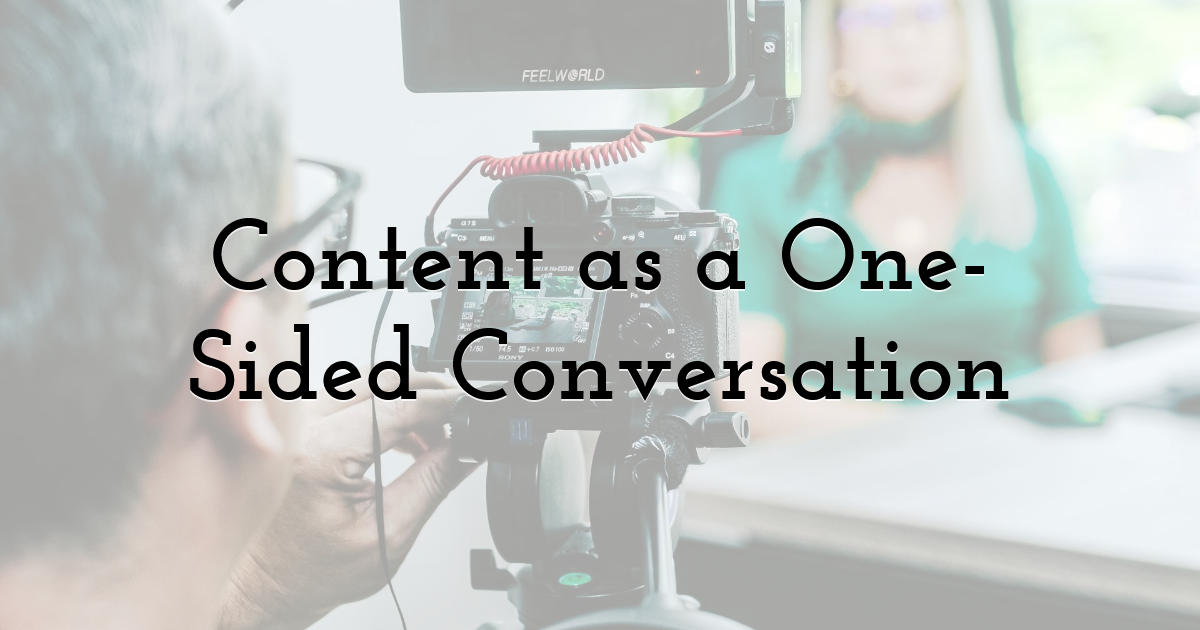
You could have fantastic points and a great way to get them across, but your content will still fall into a void if it ends up being a one-sided conversation. After all, the whole point of creating content is to achieve connections and eventual conversions. If you’re not doing that, then you’ll inevitably miss out.
Content that’s too focused on your company is at an especially high risk of falling into this trap. After all, no reader is as interested in your brand as you are. They don’t want to hear you wax lyrical about why you’re so fantastic – they want content that’s designed with their needs in mind. In other words, both parties should stand to benefit, and your benefit should probably be behind the scenes.
Remember when we said that healthcare content can be particularly difficult to get right? Well, imagine that your healthcare surgery has a brand new machine. A video walkthrough that’s all about why you’re excited about that machine’s software will see patients clicking off, and probably clicking elsewhere, in seconds. By comparison, a video that speaks solely about the benefits your patients can enjoy with this new development is a far better approach for actually increasing conversion, building trust, and generally proving you care about patients over profits as you should.
# 4 - Content That’s Stuck in a Rut

A few years ago, business blogs felt innovative. Now, company content has grown to include everything from long-form video to TikTok shorts, and even ebooks or white papers in some cases. And, those advancements only look set to keep growing as AI plays an increasing role in content overall. Not to mention that relevant content topics themselves are always changing, meaning that conversations like the importance of cloud computing have quickly been replaced with the value of automation.
If your content doesn’t reflect these adjustments, then it’ll end up stuck in a rut. And, even quality content will struggle to succeed from the depths of that outdated hole. Hence, your content strategy should be an ever-evolving part of your company.
Not only do you need to know which formats and subjects to lean into at any given time, but you’ll need to adapt to visibility challenges like AI search. Doing this will keep your content on the pulse, at the top of consumer searches, and way more likely to drive conversions overall.
Whether you run a hotel, a healthcare surgery, or a big business, ask yourself if any of these mistakes are causing even your greatest content to fail right now.
Until next time, Be creative! - Pix'sTory
Recommended posts
-
Why You Need to Nail Your Visuals in Email Marketing
Read More › -
8 Useful Grammar and Proofreading Checkers for Content Marketers
Read More › -

How AI 3D Tools Are Expanding the Possibilities of Visual Content Creatio...
Read More › -

An Ultimate Guide on The Best Video Marketing Software
Read More › -
8 Social Media Automation Tools that will Boost Your Traffic
Read More › -

Creating and Selling Watercolor Clipart Online
Read More ›