Stop Searching for Stock Images and Start Creating Your Own With AI
It is 9 pm. You have a blog post going live tomorrow morning and you still need a header image. So you open your go-to stock photo site and start searching. Twenty minutes later you are on page six, squinting at photos that are either too corporate, too staged, or something you have already seen on three other websites this week.
Sound familiar? Most content creators have been there more times than they can count. The stock photo search is one of those quiet frustrations that nobody really talks about but everyone quietly endures.
What if you never had to do it again? In 2026, that is not a hypothetical. It is just a matter of knowing which tools to use.
The Stock Photo Problem Nobody Talks About
Stock photo libraries are enormous. Millions of images, thousands of categories, endless scrolling. And yet somehow, when you need something specific, they almost never have exactly what you are looking for.
The images are generic by design. They are built to be broad enough to appeal to as many buyers as possible, which means they end up feeling like they belong to everyone and no one at the same time. Your brand, your tone, your specific visual need get lost in a sea of smiling people in business casual, shaking hands in glass offices.
Hiring a photographer or designer solves the specificity problem but creates a new one. Time and cost. Even small projects take days and budgets that not every creator or small business can justify for a single blog post.
What an AI Image Generator Actually Does
Tools like Glima, an AI image generator, have made it possible to turn a simple description into a professional image in seconds. You type what you want to see, the AI interprets your words, and the image appears. No searching. No compromising. No waiting.
These tools have been trained on hundreds of millions of images and have developed a genuine understanding of visual language. Style, mood, lighting, composition, context. They do not just pattern-match keywords. They actually understand what "warm and minimal" or "energetic and urban" looks like as a visual concept.
The quality in 2026 is genuinely impressive. We are talking about images that hold up in blog posts, social media campaigns, product pages, and digital ads without anyone batting an eye.
The Prompt Is Where the Magic Happens
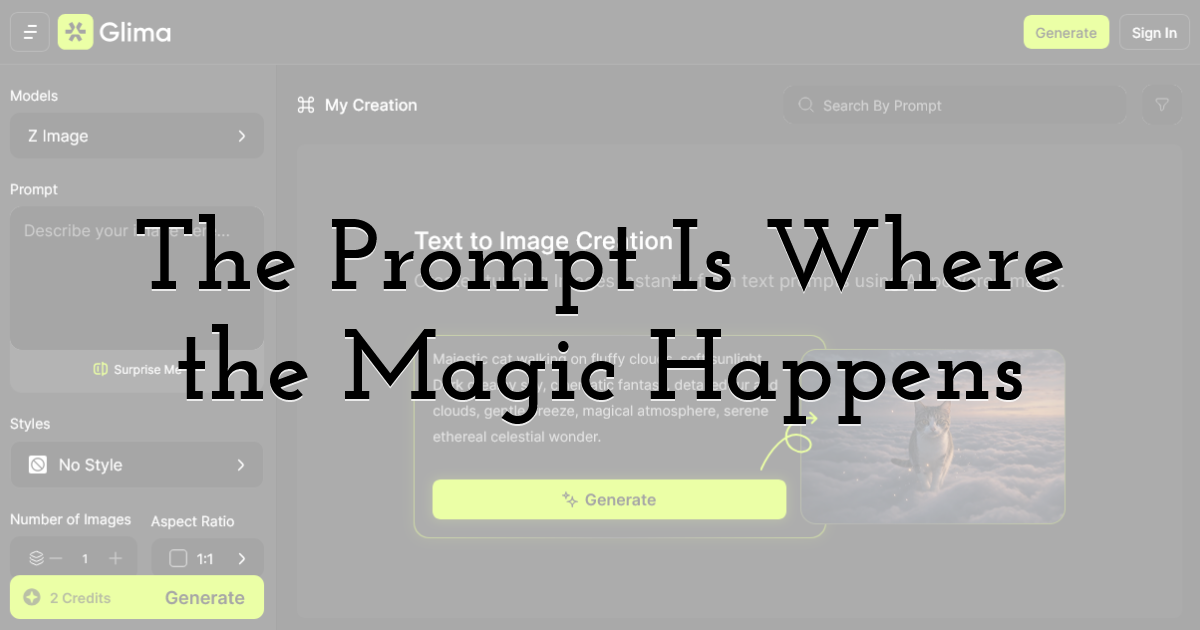
Here is something that surprises most people when they first start using AI image tools. The skill is not technical at all. It is descriptive. The people who get the best results are the ones who treat the prompt like a creative brief.
Compare these two prompts. First: "a coffee shop." Second: "a cozy independent coffee shop in the early morning, warm golden light, wooden tables, steam rising from a ceramic mug, no people, soft bokeh background, photorealistic." Both take about five seconds to type. The second one produces something you could actually publish.
Once you understand that the prompt is where the creative work happens, the whole thing clicks into place. You are not just generating images. You are directing them. That is a fundamentally different relationship with visual content than scrolling through someone else's library hoping to get lucky.
Your Visuals Should Look Like You, Not Everyone Else
There is a deeper issue with stock photos beyond the search frustration. When you use the same image library as everyone else in your niche, your content starts to blend in. Readers have seen those images before. They have seen them on your competitors' sites. Familiarity is the enemy of a strong first impression.
Original visuals, even simple ones, immediately signal that something different is happening here. They make your content feel intentional. They tell the reader that you put thought into every element of what they are looking at, not just the words.
AI generated images are completely original by definition. No one else has that exact image because it was created specifically for your prompt, your context, your brand.
This Is What It Looks Like in Practice
For bloggers, this means a custom header image for every single post without touching a camera or opening a design tool. For social media managers, it means creating on-brand visuals that actually match the content rather than vaguely gesturing at the topic.
For small e-commerce brands, the impact is even more significant. Lifestyle shots, background variations, seasonal campaign imagery, product mockups. All of it is generatable from a desk in minutes rather than requiring a full production shoot.
The playing field between a solo creator and a well-resourced team has genuinely narrowed. That is not hype. It is just what the tools can do now, and the gap keeps closing.
Your Creativity Is Still the Most Important Ingredient
The conversation around AI tends to get dramatic quickly. People worry about authenticity, about whether this counts as real creative work, about what it means for designers and photographers. As synthetic visuals become more realistic, an AI image detector can help assess whether an image is likely to have been generated using artificial intelligence.. Those are legitimate conversations worth having.
But here is what is actually happening in practice. The creative decisions still belong entirely to you. What mood do you want? What story should this image tell? What feeling should someone walk away with? The AI does not answer those questions. You do. It just removes the technical barrier between your idea and a finished image.
Most creators who work with these tools find that it makes them more creative, not less. When execution is fast and cheap, you are willing to experiment with ideas you would never have pursued before.
Stop Searching. Start Creating.
The next time you need an image for a blog post, a social update, or a campaign, try something different. Instead of opening a stock photo site, open an AI image tool. Describe exactly what you need. Generate a few versions. Pick the one that works.
The whole process takes less time than a frustrating stock photo search, and the result is something nobody else has. Something that actually fits your content, your brand, and your vision.
The best visuals you have ever created are not sitting in someone else's library waiting to be found. They are waiting for you to describe them.
Until next time, Be creative! - Pix'sTory
Recommended posts
-
Image Quality Problems That Can Ruin an Otherwise Great Design
Read More › -
How AI 3D Tools Are Expanding the Possibilities of Visual Content Creatio...
Read More › -
Design.com vs Designs.ai: Which Logo Tool Delivers Better Results?
Read More › -
AI-Powered Call Center Outsourcing is Moving Support From a Cost Center t...
Read More › -

5 Best AI Development Companies and AI Services in 2025 – Expert Enterpri...
Read More › -
The New Era of AI Video Creation: What Makes People Keep Watching
Read More ›