Why Upskilling Matters More Than Ever in 2026
The conversation around upskilling often focuses on large organisations, but the reality is much broader.
Freelancers, content creators, consultants, marketers, and small business owners are all facing the same challenge: the skills needed to do their jobs are evolving faster than ever.
A writer may now be expected to create graphics and short-form video. A small business owner might need to understand email marketing, social media advertising, website updates, and basic analytics. Even employees in traditional roles are increasingly being asked to work with new technologies and digital tools.
And seemingly suddenly, learning can no longer be treated as something that happens occasionally. It has become an ongoing part of work itself.
The Rise of the Multi-Skilled Professional
Staying competitive in 2026 means continuously adding small but valuable skills that improve efficiency and productivity.
Businesses increasingly value people who can contribute across different areas rather than relying on specialists for every task. While expertise still matters, having a broader skill set often makes teams more agile and adaptable.
For example:
- • A content writer who understands basic graphic design can create more complete campaigns.
- • A marketer who can edit simple videos can react faster to trends.
- • A business owner who understands analytics can make better decisions without waiting for reports.
These skills don't replace specialists. They simply help people work more independently and effectively.
How People Are Upskilling
Learning looks very different today than it did even a few years ago. Instead of committing to lengthy qualifications, you can now access smaller, targeted learning opportunities that help you solve immediate challenges.
Whether you're learning a new platform, improving a specific skill, or filling a gap in your workflow, practical application often matters more than formal certification.
For individuals, learning often happens through online courses, tutorials, webinars, and professional communities. Businesses, however, need a more structured approach.
This is where learning management systems (LMSs) play an important role.
What is a learning management system? It’s basically a system that lets you organise, deliver, and track training in one place. Rather than relying on scattered resources and informal training, an LMS provides a central place to deliver learning programmes, track progress, and ensure employees develop the skills needed for their roles.
Platforms like Kallidus help organisations create consistent learning experiences across teams, making it easier to support ongoing development as business needs evolve.
Learning New Skills Is Often Faster Than You Think
A common mistake is assuming that learning a new skill requires months of study.
Sometimes it does. But the skills that make the biggest difference today can be learned surprisingly quickly. You don't need to become an expert animator to create engaging animated social content.
Nor do you need years of design experience to create professional-looking graphics. Learning enough to feel confident is more valuable than trying to become an expert.
That confidence changes how you work. Instead of putting off ideas because they require a skill you don't have, you can simply start creating. And that's becoming increasingly important when content moves as quickly as it does today.
The creators who stand out aren't always the most talented. They're often the ones who keep adding small skills to their toolkit until creating, designing, editing, and publishing all feel like part of the same process.
Creative Work Has Become More Visual
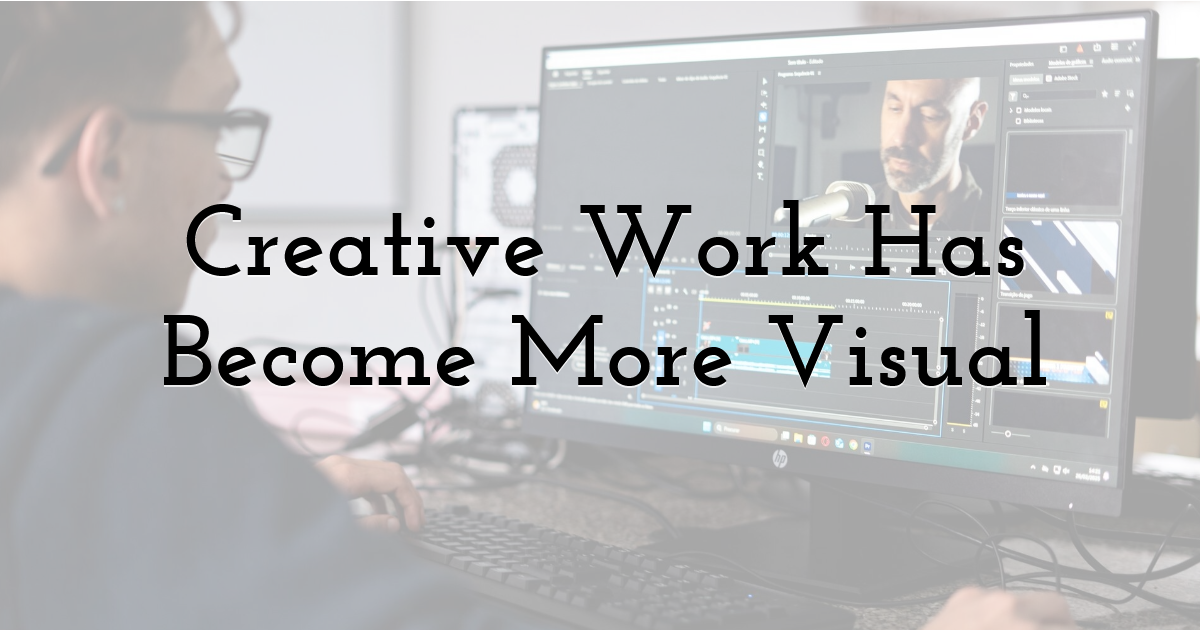
There was a time when writing good content was often enough. Today, even the best article can struggle to gain attention without supporting visuals. The same applies to social media posts, newsletters, presentations, online courses, and promotional campaigns.
Visual content now plays a role in almost every aspect of digital communication, including:
- • Social media graphics
- • Infographics
- • Presentation slides
- • Email marketing visuals
- • Short-form video thumbnails
- • Educational content assets
If you're a blogger, you've probably found yourself creating featured images, Pinterest graphics, social media visuals, or infographics alongside your written content.
If you're a marketer, you may need graphics for five different platforms before lunch. And if you're running your own business, waiting days for every small design request isn't always practical.
Video Isn't Just for Video Creators Anymore
A lot of people still think video creation belongs to YouTubers, production teams, or social media influencers. In reality, almost everyone creating content online is expected to use video in some form.
You might want to turn a blog post into a short social clip. You might need a product demonstration for your website. You may simply want to create a more engaging Instagram post than a static image.
The challenge is that traditional video editing software can feel overwhelming when your actual job is something else entirely.
If video has become part of your workflow, learning simpler tools can make the process far less intimidating. Today, it's possible to create animated content, edit videos, and produce professional-looking visuals without spending months learning complex software.
A basic understanding of video creation is quickly becoming as useful as knowing how to use a spreadsheet or schedule social media content.
The People Moving Fastest Are Usually Learning Constantly
One of the biggest differences between creators who thrive and those who struggle isn't talent. It's a curiosity.
If you're willing to learn a new tool, test a different workflow, or spend an hour figuring out how something works, you're often able to adapt far more quickly when new demands appear. That doesn't mean chasing every trend. It means paying attention when a skill keeps appearing in your workflow.
If you constantly need graphics, learning graphic design makes sense. If you're publishing content across multiple channels, understanding simple animation and video editing becomes valuable.
If repetitive tasks are consuming your week, learning automation tools can free up significant time. You’re not expected to learn everything, but try to remove the friction that slows you down.
AI Has Become a Skill, Not Just a Tool
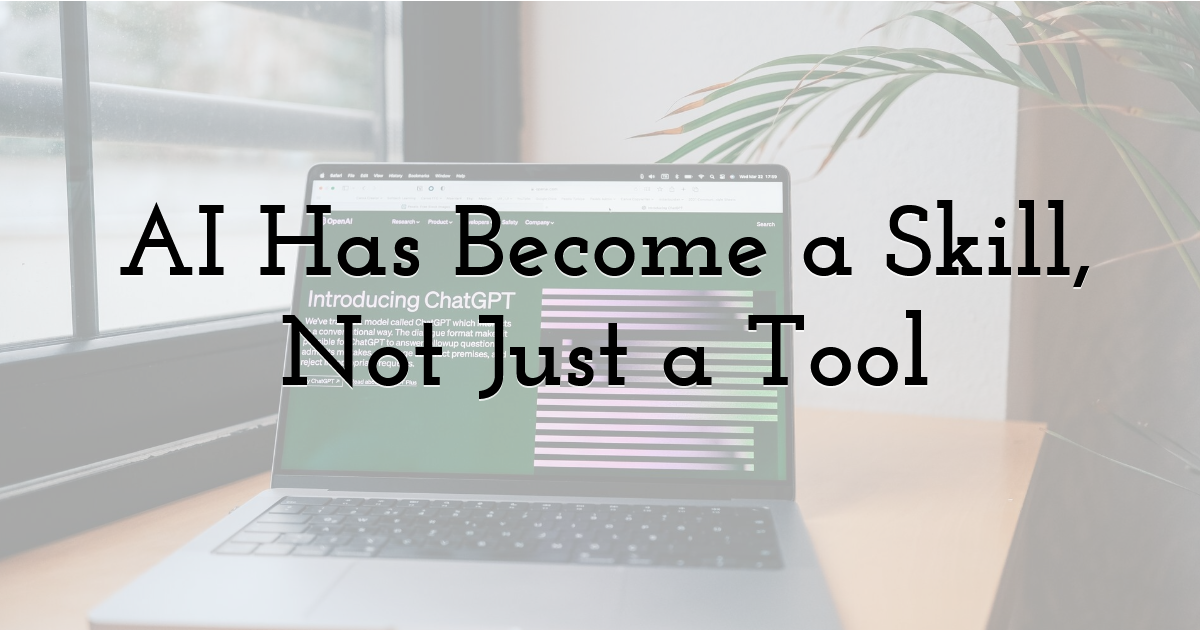
Artificial intelligence has rapidly become part of everyday workflows across industries.
Whether someone is creating content, conducting research, analysing information, or streamlining repetitive tasks, AI tools are increasingly part of the process.
The advantage doesn't come from simply having access to AI. It comes from knowing how to use it effectively. Understanding how to write better prompts, evaluate outputs critically, and combine AI-generated content with human expertise is becoming a valuable skill in its own right.
Like design and video editing, AI literacy is quickly becoming another capability that helps professionals work more efficiently and adapt to changing demands.
Design Skills Are Becoming Essential for Non-Designers
One of the clearest examples of upskilling today is the growing number of non-designers creating their own visual content.
Writers are building graphics. Coaches are designing promotional materials. Content creators are producing animated posts. Small business owners are creating branded marketing assets without relying on specialist software.
Most audiences don't expect every graphic to look like it came from a major creative agency. But they will enjoy it more when your content looks polished and consistent. That's becoming much easier to achieve when you're willing to learn a few practical design skills.
The Future Belongs to Lifelong Learners
Upskilling is not about collecting more skills for the sake of it. It is about making your day-to-day work easier to handle and less fragmented.
Most of the pressure in creative and business work does not come from one missing ability. It comes from many small gaps that slow things down. Design takes longer than expected. The video feels unfamiliar. Tasks pile up because every step depends on learning something new at the moment.
Not every new skill will transform your career overnight. But each one can save time, improve your results, or help you approach challenges with more confidence. Over time, those small improvements add up.
By continuously building practical skills that support their work, they're able to respond to new opportunities, solve problems more efficiently, and remain competitive in an environment that rarely stands still.
Until next time, Be creative! - Pix'sTory by Tammi Saayman
Tammi Saayman is a content strategist, writer, and editor focused on SEO and link-building for SaaS and B2B brands. She leads the off-page content team at Skale, where she helps create valuable, search-optimized articles that support organic growth.
Recommended posts
-

Landing Page Design Tips You Should Follow Today
Read More › -
4 Tools for Compressing Website Images & Why You Need To
Read More › -

6 Essentials Reasons You Should Include Images in Your Web Design
Read More › -

Why Automated Video Redaction Is More Accurate Than Manual Methods
Read More › -

How to Ensure Seamless User Experiences Across Browsers for Web-Based Cre...
Read More › -
How to Take Your Social Media Strategy to The Next Level
Read More ›