How to Plan, Create, and Optimize Content at Scale
Content marketing is one of the most effective ways to grow a business, but it is also one of the most resource-intensive. You might start with a burst of energy, writing three posts in one week, only to hit a wall of writer's block or competing priorities the next. Suddenly, your blog gathers dust for a month.
This cycle is a common struggle. To grow traffic reliably, you need more than just good ideas; you need a machine that produces high-quality articles consistently.
Scaling content isn't about working harder. It is about building a system that works for you.
When you stop relying on memory or scattered sticky notes and start relying on a process, you can double or triple your output without burning out your team.
Why most content marketing fails without a system
If you feel like your content strategy isn't delivering results, you aren't alone.
The problem usually isn't the writing itself. The problem is the lack of a workflow.
Without a system, every blog post feels like reinventing the wheel. You waste time wondering what to write next, chasing down approvals, or fixing the same basic SEO mistakes over and over.
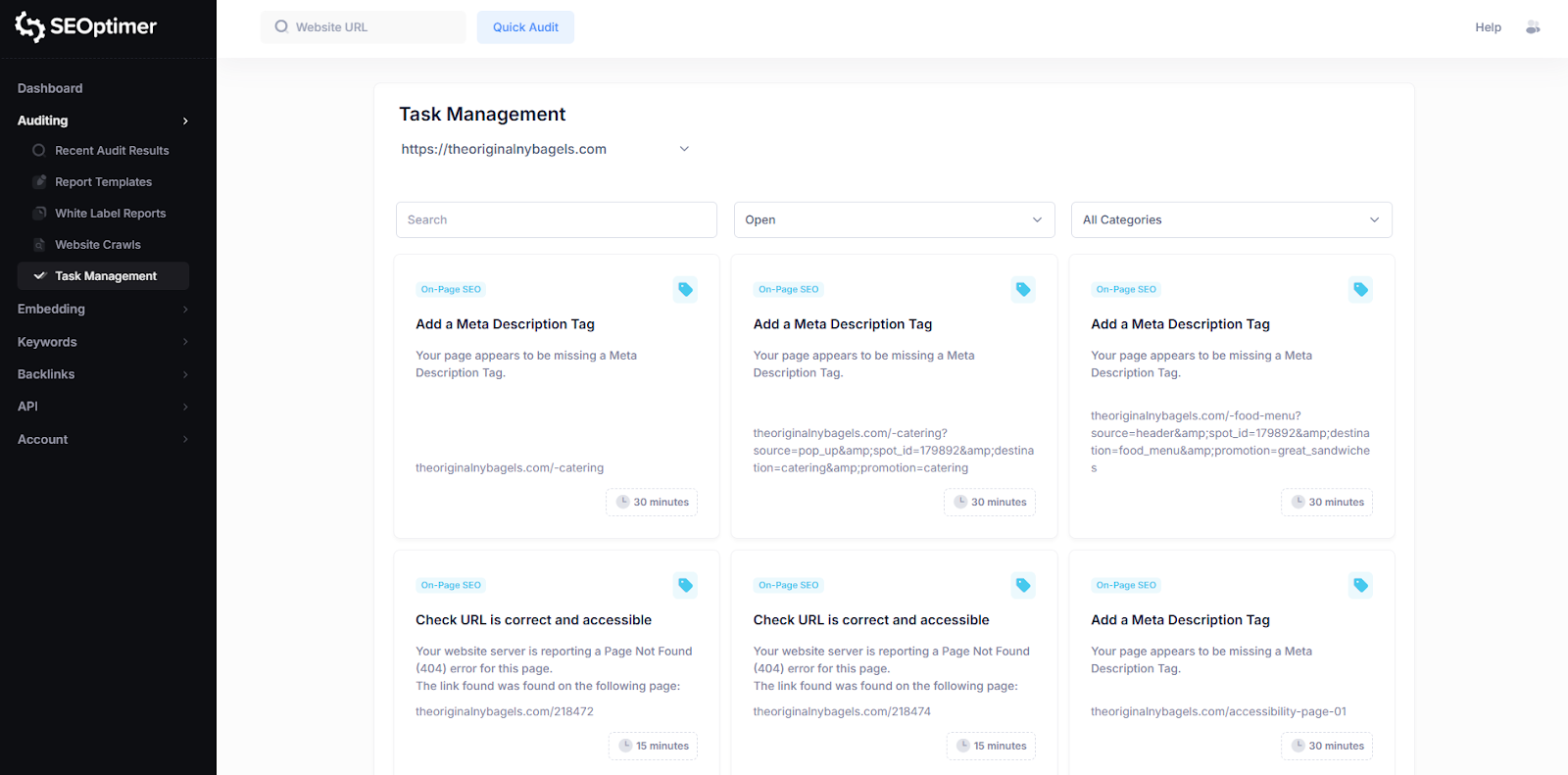
Many teams scale faster by using an SEO task management tool to track technical fixes and on-page improvements across multiple pages.
When it comes to content marketing, a documented process removes the guesswork.
It turns content creation from a chaotic art form into a predictable business function.
When you know exactly what needs to happen at every stage, you can spot bottlenecks and fix them before they derail your schedule.
Step 1: Start with clear content goals

Before you ramp up production, you need to know exactly why you are creating content in the first place.
Producing 50 blog posts a month won't help your business if they don't drive the right kind of traffic or leads.
Ask yourself what success looks like for your organization.
- • Are you trying to build brand awareness?
- • Do you need to educate users on how to use a complex product?
- • Or is your primary goal to generate leads for a sales team?
Your goals will dictate your format and volume.
If you want broad awareness, you might focus on high-volume, top-of-funnel topics.
If you need leads, you might focus on fewer, high-quality case studies or comparison guides.
Define your most important metric first, so every piece of content you produce pulls in the same direction.
Step 2: Build a content calendar
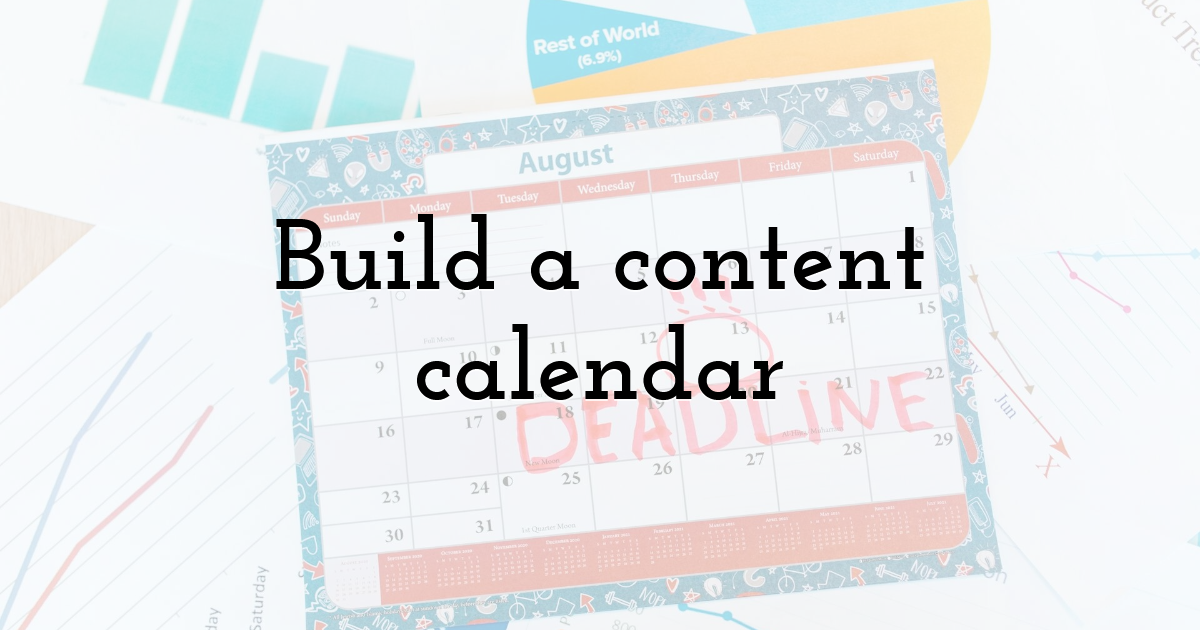
A content calendar is the backbone of any scalable operation.
It forces you to plan ahead rather than scrambling for topics the morning a post is due.
Your calendar should be a living document that your whole team can access. At a minimum, it needs to track:
- • Topic/Headline: The working title of the piece.
- • Target Keyword: The primary search term you want to rank for.
- • Status: Is it in drafting, editing, or ready to publish?
- • Publish Date: When it goes live.
- • Assignee: Who is responsible for writing it.
By planning a month or a quarter in advance, you can ensure a good mix of topics. You can balance "how-to" guides with industry news or product updates. Plus, seeing the roadmap helps prevent stress. You always know what is coming down the pipeline, giving you plenty of time to research and prepare.
Step 3: Do basic keyword and intent research

Scaling content doesn't mean churning out fluff.
Every article needs a purpose, and usually, that purpose is to answer a specific question your audience is asking online. This is where keyword research comes in.
You don't need to be a technical wizard to do this. Start by identifying the core problems your product solves. Then, look for the phrases people use when searching for solutions to those problems.
Crucially, look at the search intent behind the keyword. If someone searches for "best running shoes" they are looking for a list of options (Commercial Investigation).

If they search "how to tie running shoes" they want a tutorial (Informational).
If you write a sales pitch when the user wants a tutorial, Google won't rank your page, and users will bounce. Match your content format to the user's intent to ensure your hard work actually pays off in traffic.
Step 4: Create content in a repeatable production workflow
This is the secret sauce of scaling.
You need a standardized assembly line for your content. If every writer follows a different process, editing becomes a nightmare and quality fluctuates wildly.
Create a standard operating procedure (SOP) that outlines the steps for every piece of content. It might look something like this:
- 1. Briefing: A strategist creates a detailed outline including headers, keywords, and the angle of the article.
- 2. Drafting: The writer fleshes out the brief.
- 3. Editing: A separate set of eyes reviews for flow, tone, and accuracy.
- 4. Staging: The content is uploaded to your CMS (like WordPress).
- 5. Final Polish: Formatting, adding images, and checking links.
When you break content down into these distinct stages, you can hire specialists for each role. You might have one person who is great at strategy and outlines, and another who is a fast drafter. This specialization allows you to move much faster than having one person try to do it all.
Step 5: Optimize every piece before publishin
The final step before hitting "publish" is optimization. You have put in the work to write a great piece; now you need to make sure search engines can understand it.
Create a pre-publish checklist to catch common errors. This ensures that even as you scale up volume, you don't slip up on quality.
- • Meta Title and Description: Are they compelling and do they include your primary keyword? Google often uses these to create snippets in search results.
- • Headers (H1, H2, H3): Is your content broken up logically?
- • Internal Links: Have you linked to other relevant pages on your site to keep users engaged?
- • Image Alt Text: Did you describe your images for accessibility and SEO?
Final Thoughts:
Scaling your content production is one of the best investments you can make for long-term growth. It establishes your authority, brings in organic traffic, and builds trust with your audience. But remember, volume without value is just noise.
By setting clear goals, maintaining a calendar, and sticking to a rigorous workflow, you can increase your output without sacrificing the quality that your readers expect. Start building your system today, and you will turn your content marketing into a sustainable growth engine.
Until next time, Be creative! - Pix'sTory
Recommended posts
-

Top Tips for Creating Educational Content Online
Read More › -

Empowering Marketing With AI: How to Use AI SEO Tools
Read More › -

The 5 Best Graphic Design Tips for Social Media Marketing
Read More › -

Mistakes To Look Out For When Great Content Fails To Create Sales
Read More › -

Write a Catchy Headline in No Time in 3 Steps
Read More › -

How AI is Reshaping the Digital Marketing Industry
Read More ›