How to Turn Supplier Photos into AI Photo to Video Ads for Dropshipping Products
For dropshipping sellers, getting a product photo is easy. Getting usable video footage is not. Most suppliers provide listing images, but few offer ready-made clips for TikTok, Instagram, or Facebook ads.
That is where AI photo to video ads can help. Instead of filming every product, a seller can use a supplier photo as the starting point for a short ad. Pollo AI's Photo to Video Ads tool is designed for this use case, with product-image uploads, ad templates, effects, transitions, and formats for social platforms.
Why Use Pollo AI for Dropshipping Ads?
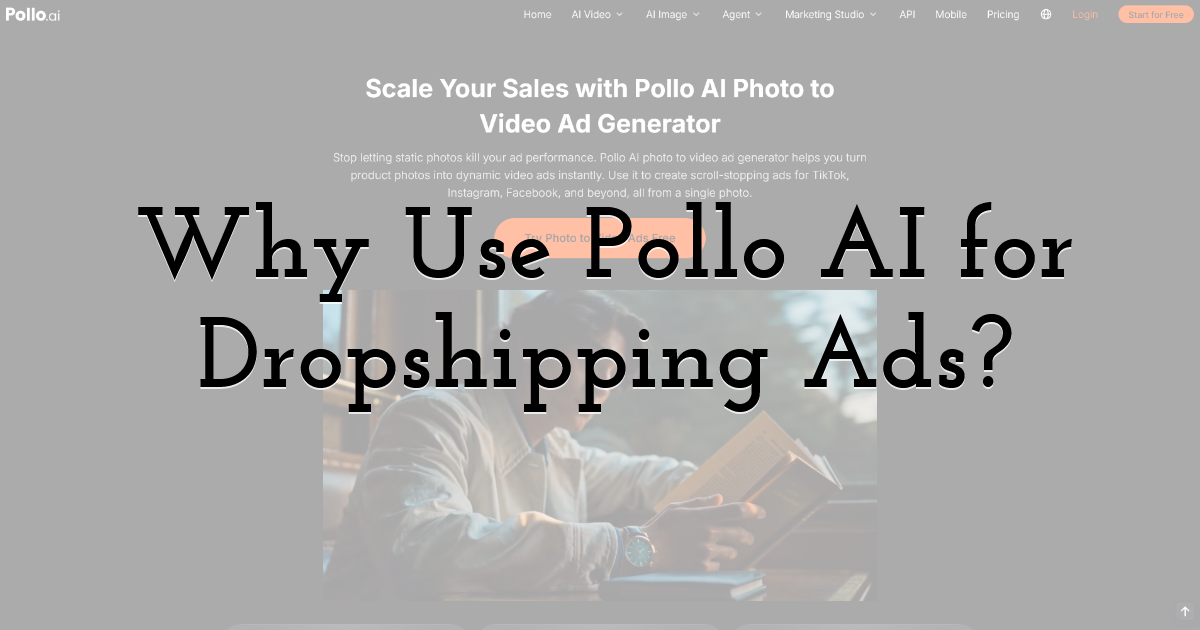
A supplier photo is usually made to show a product, not sell it. Pollo AI gives sellers a way to turn that static image into a more ad-friendly scene without requiring a new product shoot.
For sellers still testing a product, AI photo to video ads from Pollo AI can make it easier to create different video concepts from the images they already have. This means they can test a few creative ideas before spending money on professional product footage.
The seller still needs to check the final video carefully. AI can change a product's appearance or add details that are not actually there, which can become a problem when the video is used in a real ad.
How to Turn Supplier Photos into AI Photo to Video Ads with Pollo AI
1. Pick the Right Supplier Image
Not every supplier photo is a good starting point. A clear image showing one product is usually better than a collage covered with text, logos, or promotional graphics. Tools such as the DeepAI video generator can also work with product visuals, giving sellers another option when preparing video content from existing images.
The seller should also check whether the supplier allows the image to be used in advertising. Changing the image with AI does not change its usage rights.
2. Give the Product a Reason to Be in the Video
A listing photo shows what the product looks like. An ad needs to show why someone might want it.
Before opening Pollo AI, the seller should decide on one simple idea. A portable fan could be shown being used outdoors. A storage box could be placed in a messy room and shown as part of an organizing scenario.
This gives the generated video a clear purpose. It is usually better than asking AI to simply “make the product look attractive.”
3. Create the Ad in Pollo AI
Open Pollo AI Photo to Video Ads and upload the supplier image. The tool provides ad-focused templates, effects, and transitions that can be used to turn the product image into a short video.
The creative direction should stay simple. If the main selling point is portability, focus on movement and use. If the product's appearance is the main attraction, a clean product showcase may work better.
Avoid asking for too many actions in one scene. Complicated movements can make the product change shape or behave in ways it cannot in real life.
4. Check the Product Before Using the Video
This is one step dropshipping sellers should not skip.
Compare the generated video with the supplier image. Check the product's color, shape, size, buttons, logos, packaging, and features. AI may add an extra pocket to a bag, change the shape of a shoe, or make a product appear to do something it cannot actually do.
If that happens, regenerate the scene rather than using the video simply because it looks good.
5. Test Different Reasons to Buy
One supplier photo does not have to produce just one ad.
A seller could use the same image to create a convenience-focused ad, a problem-solution ad, and a lifestyle version. Pollo AI's Photo to Video Ads workflow makes it possible to create these different variations from product images.
The seller can then compare how each creative performs in an actual campaign. The best version is not necessarily the most polished one—it is the one that gets better results.
Final Thoughts:
Supplier photos can be useful advertising assets when a dropshipping seller does not have original product footage.
With Pollo AI Photo to Video Ads, the seller can start with an existing image, build a simple advertising scenario, generate the video, check it against the real product, and test different selling angles.
The goal is not to make the product look more impressive than it is. It is to turn an ordinary supplier image into a video that gives potential buyers a clearer reason to pay attention.
Until next time, Be creative! - Pix'sTory
Recommended posts
-

The Psychology of Color and Sound in Brand Video Storytelling
Read More › -

Data-Driven Roadmaps: Prioritizing Investments in Veracode Alternatives
Read More › -
Know How to Align Objects
Read More › -

5 Unexpected Industries Where AI Is Changing the Game
Read More › -
The Secret of Killer Marketing: Email and Instagram Give Benefits When Wo...
Read More › -

The Smart Data Revolution: How AI Video Generators Are Rewiring the Digit...
Read More ›