Taking A Closer Look At 6 Of The Best GRC Automation Platforms
Compliance is an important part of how many businesses operate, and in some fields, it’s important to be able to demonstrate that compliance at any stage, be it to customers, auditors, regulators, investors, or otherwise. AI is changing how businesses handle all manner of processes, and this includes the world of compliance. A suite of compliance automation tools, many of them equipped with AI, has risen to help businesses better handle the often unwieldy steps of audit prep and managing evidence. Here, we’re going to take a closer look at a range of compliance automation tools that help your business stay on the straight and narrow, and what you need to know about each of them.
Comp AI - Start-Up Friendly, Multi-Framework Support
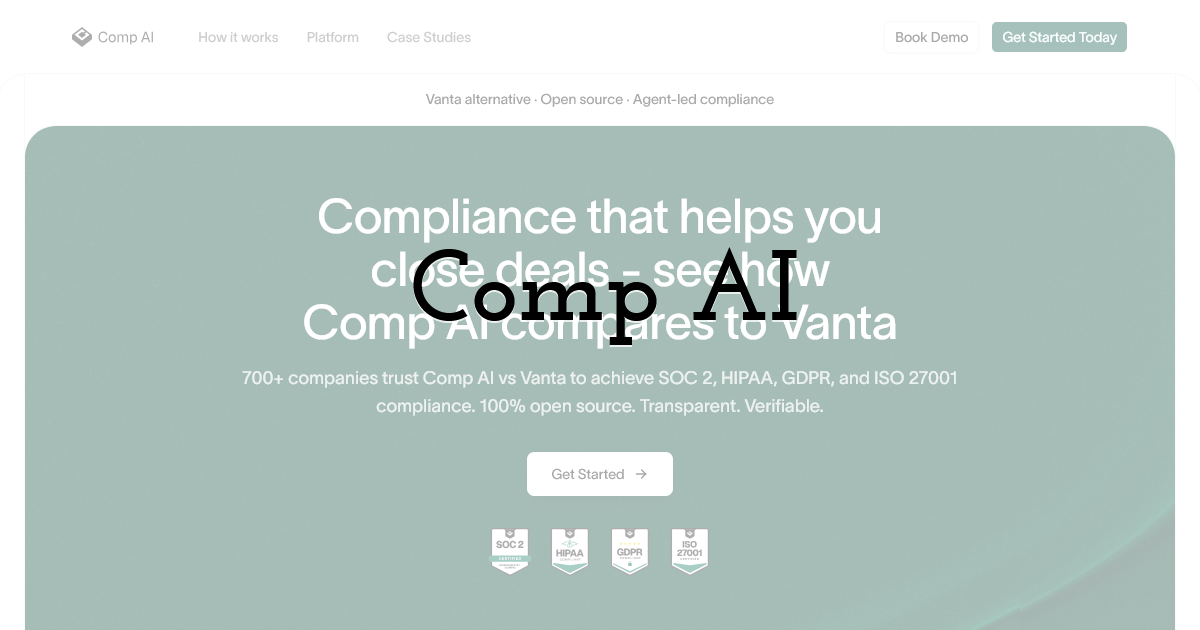
Comp AI is an AI-powered compliance automation platform that helps startups and growth-stage companies achieve SOC 2, ISO 27001, HIPAA, GDPR, and ISO 42001 readiness much more simply and affordably than many of the more legacy GRC alternatives. It makes speed a priority, helping teams move from spending ages gathering scattered evidence to streamlined workflows that are ready for audits in a matter of days rather than months. Its AI agents automate steps like evidence collection and policy generation with 200+ cloud and SaaS integrations.
Pros:
- • Automated, streamlined evidence collection and policy generation.
- • Supports SOC 2, ISO 27001, HIPAA, GDPR, and ISO 42001.
- • Low costs compared to many GRC platforms.
Cons:
- • Might not be best suited to enterprises
- • May have fewer auditor relationships than larger platforms
Hyperproof - A Continuous Compliance Operations Platform
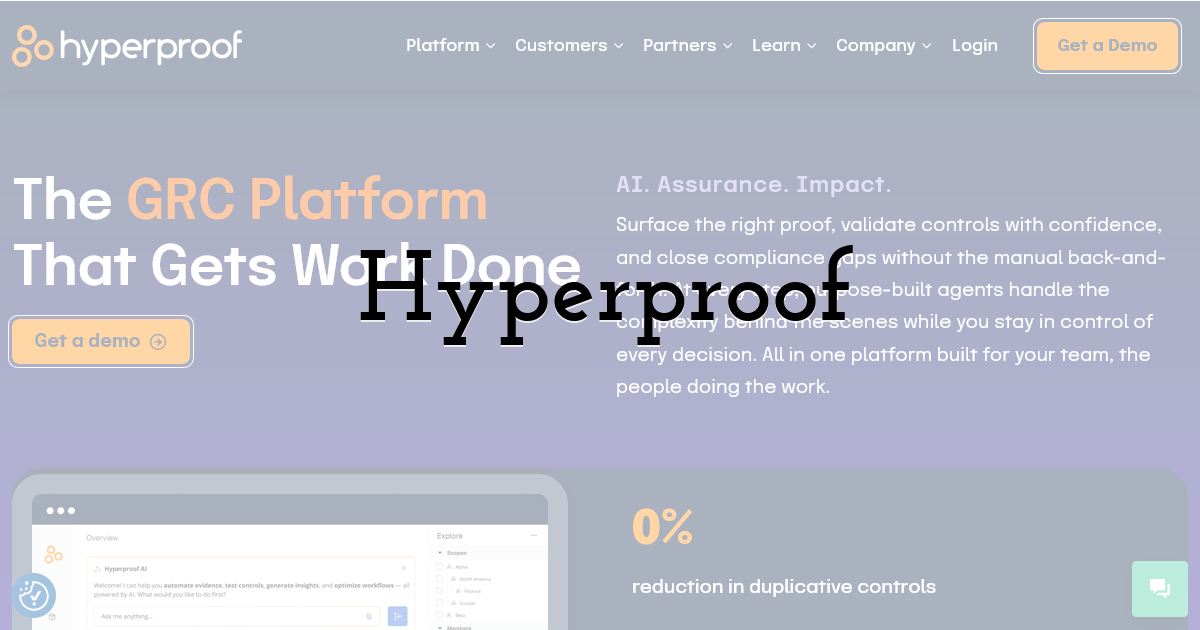
For those who are looking to scale their compliance automation across frameworks continuously, rather than pass a single audit, Hyperproof might be the tool that you need. It’s built for organizations that need to coordinate compliance, risk, security, and audit workflows in one place. As such, it’s designed to rescue duplicate control work, to streamline audits in an ongoing process, and to streamline evidence across multiple frameworks.
Pros:
- • Strong control reuse, and evidence organization.
- • Good fit for multi-framework needs.
- • AI-assisted workflows for proof, control validation, and gap closure.
Cons:
- • Not as well-suited to small startups.
- • Requires process discipline from users.
Optro - Enterprise-Focused Audits, Controls, And Compliance
Optro, formerly AuditBoard, is an enterprise GRC platform focused on audit, risk, controls, compliance, and connected risk management. It offers AI-powered tools that continuously analyze risk signals, test controls, and respond automatically to incidents, able to handle the scale and complexity of major enterprise operations. As such, it’s best suited for large organizations with their own internal audit nd compliance teams, able ot provide shared workflows and visibility across departments. As such, it might be overkill for smaller businesses that are simply looking for rapid audit readiness, but it provides complete compliance control for more mature operations.
Pros:
- • Strong enterprise audit, risk, and controls focus.
- • AI-powered connected-risk positioning.
- • Well-suited for GRC needs across departments.
Cons:
- • Likely too much for early-stage startups.
- • Less focused on lightweight and speedy certification.
OneTrust - Broader Governance, Privacy, And Data Safety
As a broad governance platform that’s able to help with privacy, consent, data use, AI governance, and third-party risk, amongst other compliance needs, OneTrust offers scaling compliance management for growing companies. Compliance automation is just one of the facets of this tool, but audit readiness and collecting real-time evidence from external systems across 50+ frameworks, including SOC 2, ISO 27001, GDPR, HIPAA, and NIS2, is one of its key strengths. As such, it’s well-suited for companies that are worried not just about compliance for the sake of security certification, but also how it ties into other matters like privacy, data governance, and vendor risk. As such, this does make it a more complex tool than many smaller businesses might be equipped to handle.
Pros:
- • Broad coverage across privacy, risk, and compliance.
- • Supports a wide range of compliance frameworks.
- • Good for businesses with complex regulatory obligations.
Cons:
- • Likely too complex for businesses focused primarily on compliance certification.
- • Not as well-suited for smaller teams.
LogicGate - Flexible, No-Code Approach To Building GRC Workflows
LogicGate offers Risk Cloud, an AI GRC platform designed to automate and scale governance, risk, and compliance workflows. It offers no-code configuration with support for a wide range of frameworks, including ISO 27001, SOC 2, PCI DSS, NIST, HIPAA, GDPR, and others. Its flexible approach around configurable GRC processes can be adapted to the needs of different businesses, with solutions that cover risk management, cybersecurity, audits, controls compliance, and evidence collection. This ability to suit the platform to your needs can fit more complex teams, although it does require more thoughtful use than many of its more plug-and-play alternatives.
Pros:
- • Highly configurable, no-code GRC workflows.
- • Broad framework and risk management coverage.
- • Strong fit for mature organizations with complex needs.
Cons:
- • Configuration can add more work than others.
- • Not as simple as more plug-and-play audit tools.
Anecdotes - Data-Driven Continuous Compliance
An enterprise agentic GRC platform built around structured compliance data, Anecdotes provides automation across governance, risk, compliance, and trust workflows. It’s designed for companies that intend to make compliance data a consistent operating layer, rather than audit evidence that’s used once a year for certification, and that’s it. As such, it’s well-suited for mature organizations with more complex systems and custom controls. This means it’s not very well suited for small teams who are just looking for compliance readiness, but want a strong data structure for all of their compliance and trust needs.
Pros:
- • Strong data-driven and AI-agentic GRC.
- • Useful for complex enterprise compliance.
- • Provides ongoing GRC workflows.
Cons:
- • More complex than many businesses’ compliance needs.
- • Heavier implementation required, not as suited for smaller teams.
So, Which Should You Choose?
There is a wide range of compliance automation tools that can meet the needs of different companies. Whether you’re looking for occasional help or tools to help you consistently manage compliance, or you need a tool that’s better suited for smaller companies or scaling SaaS setups, the recommendations above can help you settle on those that best suit your needs. For example, for growing businesses that need quick compliance above all else, Comp AI may be the best solution.
Until next time, Be creative! - Pix'sTory
Recommended posts
-

How to Add an Anime Filter to Your Videos
Read More › -

StudyAgent Review: The All-in-One Writing Tool for Students
Read More › -
Empowering Marketing With AI: How to Use AI SEO Tools
Read More › -

Best AI Video Generators for Storytelling in 2026 (Expert Reviewed)
Read More › -
4 AI Music Tools That Are Actually Worth Your Time in 2026
Read More › -
Krea.ai or Midjourney? Full Platform Comparison
Read More ›