Why Is Brand Blocking Important in Retail?
Picture walking into a supermarket for a bottle of sparkling water. You know the brand, you’ve bought it before, and you find it on the shelf without reading a single label.
Its colors, logo, typography, and packaging have become familiar enough that you recognize the products before you consciously look at them. If those bottles were scattered between half a dozen competitors, finding one would take a lot more work.
Brand blocking solves that by grouping a brand’s products into one recognisable presence on the shelf. It ties together packaging design, shopper psychology, and the commercial realities of retail.
Done well, it helps shoppers find the brand and choose between its products. Done badly, the consistency that makes the brand recognisable makes its products hard to tell apart.
What Is Brand Blocking in Retail?
“Brand blocking means placing a brand’s products together on a retail shelf instead of spreading them among competitors. The products form a distinct visual block, usually held together by shared colors, logos, typography, and packaging design,” says Jason Vaught, marketing director at SmashBrand, a packaging design and branding company.
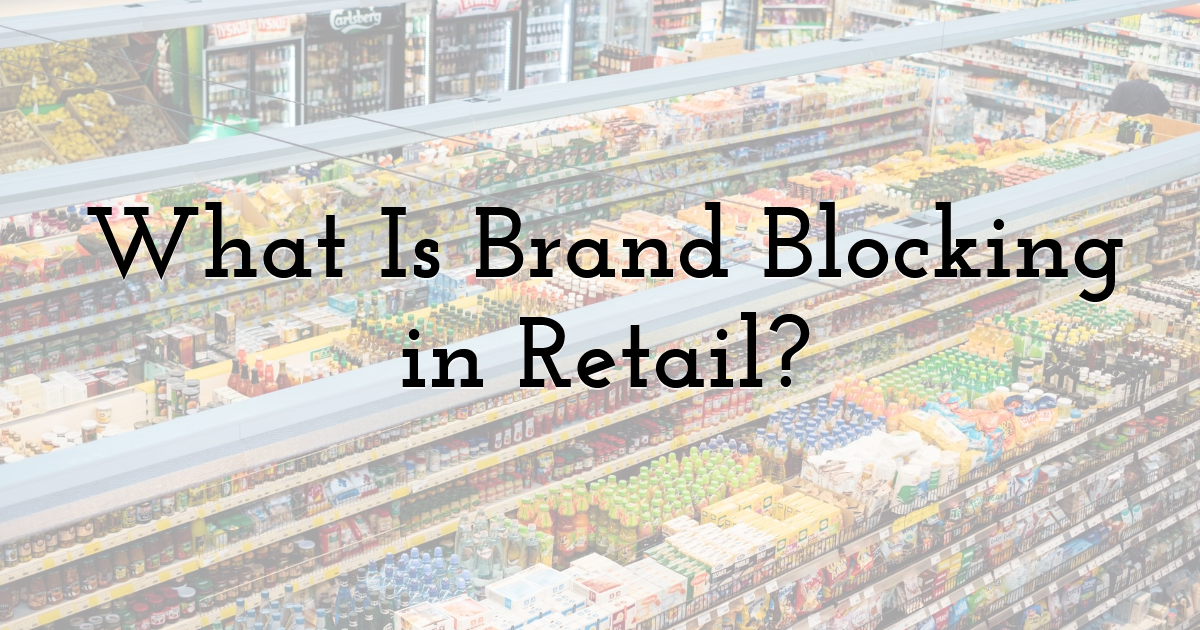
Take a supermarket drinks aisle where one brand sells six flavors of sparkling water. If the cans sit beside one another, the shared design creates a recognisable group, and a shopper scanning the aisle may notice it before reading the name of any single flavor.
The block can run horizontally across a shelf or vertically down several shelves. Which works better depends on the category, the number of products, the available space, and the retailer’s planogram, the layout that specifies where products go and how many facings each one gets.
Placement only does part of the work, though. A retailer can put every product in exactly the right spot and still end up with a weak block if the packaging has no coherent visual identity. The products need to look related when they sit together, so designers have to think about the whole range instead of judging each package on its own.
The hard part is making several products look like one brand without making them look like the same product.
Why Is Brand Blocking Important for Brands Selling Through Major Retailers?
A retail shelf is competitive, and attention is limited. Shoppers have products to find and decisions to make, and they have little reason to study every package.
That leaves brands with two jobs. They need to stand out from competitors and be quick for returning customers to recognize, and they need a consistent identity that still explains what makes each product different. Brand blocking helps with both.
It Makes the Brand Easier to Notice
A single product on a crowded shelf competes with everything around it: neighboring brands, promotional signs, different package shapes, and competing colors.
Six products from the same brand placed together take up more visual space, and their repeated design elements form a pattern. A shopper can register one coherent unit instead of processing six unrelated packages, so the brand gets a much larger presence than any one product could manage.
Color makes this especially obvious. A soft drink brand with consistent red packaging might create a red block across several facings, and a shopper could register that red before reading the brand name or flavor.
Brighter packaging isn’t the answer, either. Retail shelves already carry plenty of visual noise, and a distinctive, consistent design system builds recognition without adding to it.
This applies anywhere shoppers face many products in a small space, including supermarkets, pharmacies, mass-market retailers, and other high-volume stores. The brand has to communicate quickly in all of them.
It Helps Shoppers Find What They Came For
A returning customer might know exactly which yogurt brand they prefer and still need the right flavor, size, or formulation. They have to find the brand first, then pick the product within its range.
Brand blocking supports that sequence. The shared visual identity points the shopper to the brand, and the differences between packages help them pick the right product. A shopper who recognizes the brand but can’t tell its products apart is still stuck.
Retailers benefit when products are easier to locate, too. A shopper who finds the intended item has less reason to search the shelf repeatedly or leave without it. For the brand, this helps protect purchases from existing customers, provided the packaging cues are visible enough for customers to use.
It Builds Brand Recognition Over Time
People learn visual patterns through repeated exposure, and logos, colors, package shapes, typography, and illustration styles all become associated with particular brands. Brand blocking brings several of those cues together in one place.
Think about a customer who regularly buys a particular yogurt. On the next shopping trip, they may recognize the familiar colors before reading any product names, and that pattern works as a shortcut to the product.
For packaging designers, this widens the scope of the job. Every product in the range can reinforce the brand’s identity, as long as the design system is consistent.
It also gives brands a foundation for expansion. A new flavor or formulation can build on visual elements customers already recognize. It still has to show what makes it different, but it doesn’t need to establish a whole new identity.
That’s one reason packaging systems should be designed with the full portfolio in mind. A design that works beautifully for one product may do very little for recognition when it sits beside five unrelated-looking packages from the same company.
It Makes Product Comparison Easier
A brand block has two responsibilities that can pull against each other. The brand has to look consistent, and the individual products have to be easy to tell apart.
That conflict gets sharper as a range grows. A beverage company may offer a dozen flavors, and a personal care brand may sell several formulations or strengths. Shoppers need to recognize the brand without confusing one option with another.
If every package looks different, the range loses its coherence. If every package looks almost identical, customers struggle to find the one they want. Designers usually solve this by fixing some elements and varying others.
A beverage range might use the same logo placement, typography, and basic layout on every can and give each flavor its own accent color. The repeated elements make the cans read as a family, and the accent colors help customers move through the range. The real design decision is which elements stay fixed and which ones change.
How Does Brand Blocking Affect Shopper Behavior and Psychology?
Brand blocking changes how shoppers process the shelf. It can make familiar products easier to find, introduce shoppers to new ones, and keep them within a brand’s range. Brands and retailers can both benefit, though not always in the same way.
It Reduces the Effort Required to Shop
A crowded shelf gives shoppers a lot to do. They have to spot relevant products, work out who sells them, read labels, compare alternatives, and decide.
A recognisable brand block gives them a place to start. A returning customer can look for the familiar group and focus on the options inside it, and the consistent packaging gives the search some structure.
This is why packaging and placement can’t be treated as separate decisions. The packaging has to make the brand recognisable from the shelf, the arrangement has to preserve that recognition in the store, and once shoppers reach the brand, the range has to be organized so they can pick the right product. A well-designed package can’t do all of that alone, and a carefully arranged shelf can’t make up for packaging that gives shoppers no reliable way to identify the brand.
It Can Encourage Shoppers to Explore More Products
A shopper who comes into an aisle for one product may notice another from the same brand simply because it sits next to the first.
Someone reaching for a familiar flavor of sparkling water might spot a new flavor beside it. The new product benefits from sitting next to something the customer already knows, so it doesn’t have to win attention entirely on its own. For a launch, that’s a useful advantage: a place in an established visual family and a chance to be seen by existing customers.
Proximity doesn’t guarantee a purchase, though. A shopper may have no interest in trying something new, may be watching the price, or may be on a very specific errand. The new product’s appeal and positioning still decide whether they pick it up.
It Can Reinforce Loyalty While Limiting Exploration
The arrangement that helps a loyal customer find a familiar product can also make it easier to overlook competing brands.
For the brand, that may be the whole point. A customer who finds it quickly and stays within its range is a customer it has kept.
A retailer has a broader concern. It has to consider whether the arrangement works for the category as a whole, including how shoppers discover alternatives and compare what’s available. So brand blocking affects how the entire assortment is experienced, which is why shelf placement and category merchandising matter alongside design.
How Packaging Designers Plan for Brand Blocking
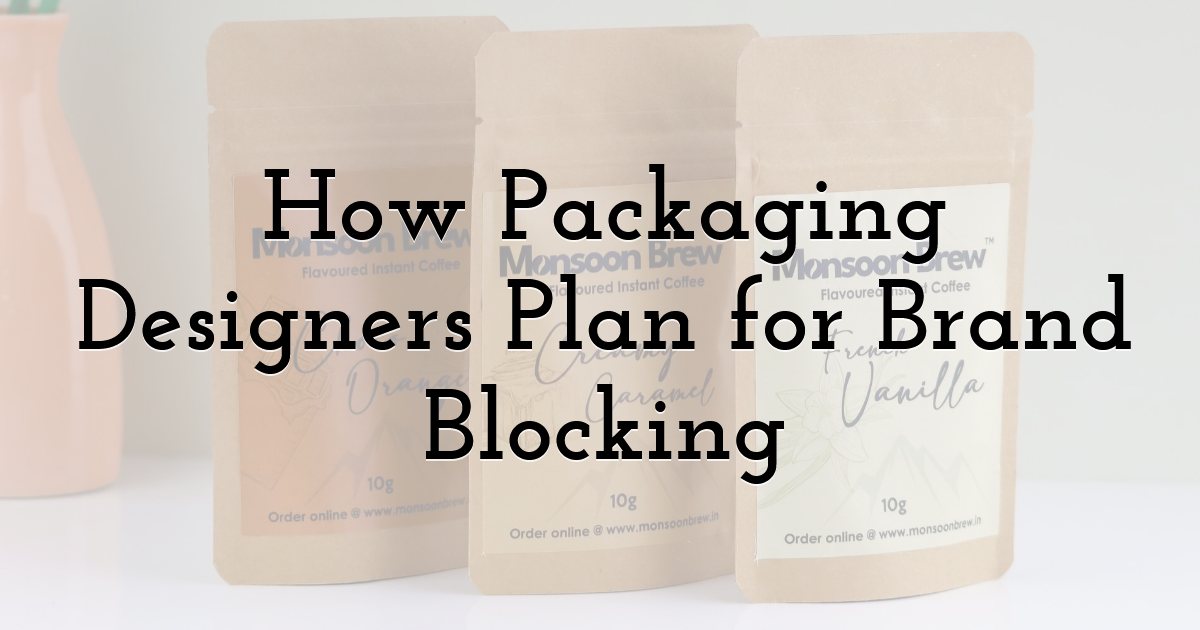
Brand blocking works best when designers plan for how the entire range will look on a real shelf. Several packages have to form a recognisable system when they sit side by side under actual retail conditions.
Build a Consistent Visual Identity Across the Range
The first decision is which elements stay fixed. These might include logo placement, typography, layout, imagery, and a primary color or graphic device, which together give the range a recognisable signature.
Next, evaluate the products as a group. A package that looks distinctive on its own may lose its impact surrounded by other variants, and small inconsistencies that seem harmless in individual reviews become obvious once the whole range is lined up. Review the full portfolio together so the packages work as one system.
Use Color Strategically
Color is one of the quickest ways shoppers tell products apart. It can unify a range or separate individual variants.
Some brands use one dominant color across their products and add smaller accent colors for different flavors or formulations. Others keep the same layout and logo and give each product its own primary color. Neither approach is automatically better. The choice depends on the brand’s existing identity, the category, and how much information shoppers need to tell the products apart.
Either way, check how the colors work together when the packages share a shelf. The pattern should make the brand easy to recognize without making the assortment monotonous or confusing.
Design for the Shelf Shoppers Actually See
Packaging is often evaluated on a screen or in a presentation, where the product looks larger and clearer than it will in a store.
The shelf is different. A logo that’s perfectly legible on a large monitor can be hard to read on a small pack several feet away, and product information can be hidden by a shelf edge, a neighboring package, or the way the product is turned.
Designers need to evaluate packaging at realistic viewing distances and in representative retail environments, because shelf height, lighting, the number of facings, and package orientation all affect which design elements shoppers can see. Testing under those conditions shows whether the brand stays recognisable and whether shoppers can still tell the products apart.
Account for the Retailer’s Planogram
A planogram specifies how products are arranged within a retail fixture: where each product sits, how many facings it gets, and what appears beside it. Those decisions can change how the brand block looks, sometimes a lot.
A design system might work well when a retailer stocks six products together and lose much of its impact when only two are on the shelf. A layout built for a horizontal arrangement can also look different when the retailer places the products vertically.
Packaging designers and brand teams should account for these constraints early instead of treating shelf execution as someone else’s problem. Planning for different assortments and store formats helps keep the brand recognisable when the ideal arrangement isn’t possible.
Make Individual Products Easy to Distinguish
Designers should set a clear hierarchy between the brand name, the product type, and whatever differentiates the variant. Depending on the category, that could be flavor, size, formulation, strength, or a particular benefit.
This matters most when products have similar names or nearly identical packaging. A design can look consistent and attractive and still make choosing the right product harder than it should be. Testing whether shoppers pick the correct item under realistic conditions gives a better answer than internal design reviews alone.
How Can Brands Measure the Effectiveness of Brand Blocking?
A shelf that looks prominent isn’t necessarily one that sells. Brands need to check whether the arrangement changes shopper behavior and retail performance.
First, do shoppers notice the brand? Shelf visibility measures whether the brand and its products attract attention in a realistic retail setting.
Second, can shoppers find the specific product they want? Findability covers how easily and quickly customers locate an item within the assortment.
Third, can they tell the variants apart? recognizing the brand doesn’t mean shoppers can correctly identify different flavors, sizes, or formulations.
Finally, does the arrangement change what people buy? Sales data shows whether the new arrangement affects purchases, and whether any increase grows the category or mostly shifts purchases between products.
Testing alternative shelf arrangements and comparing shopper responses gives brands evidence before they roll out a new approach across major retail accounts. Reviewing sales performance alongside those observations shows whether the block is helping shoppers and whether that produces a meaningful commercial result.
Final Thoughts:
Brand blocking turns a collection of individual packages into a recognisable shelf presence. It can make a brand easier to notice, help returning customers find familiar products, and give shoppers a clearer way through an expanding range.
For packaging designers, the challenge is keeping the range consistent while each product stays clear. The products need to look like they belong together, and customers still need to know which one to buy.
That takes a design system built around the full portfolio, realistic shelf conditions, and the way retailers actually arrange products. Brands that test those decisions against shopper behavior and retail performance can judge brand blocking on what it does for sales, not just on how the shelf looks.
Until next time, Be creative! - Pix'sTory
Recommended posts
-

Before You Sign Anything: What Every Designer Should Know About Clients a...
Read More › -

How to Turn Static Designs Into Engaging Storytelling Videos (Even if You...
Read More › -
How to Design a Step and Repeat Banner: A Complete Guide for Events and B...
Read More › -
5 Proven Ways to Create Eye-Catching Video for Social Media
Read More › -

Web Design Essentials for Scalable Educational Content
Read More › -

The Best Images Size for Social Media Posts to Boost Your Digital Presenc...
Read More ›